New Delhi | July 2, 2026
Amarnath Yatra 2026 Guide is essential reading for devotees planning to undertake one of India’s most revered Hindu pilgrimages. The annual pilgrimage to the sacred Amarnath Cave Shrine officially begins on July 3, 2026, and will continue until August 28, 2026.
Ahead of the pilgrimage, Union Home Minister Amit Shah chaired a high-level review meeting in New Delhi to assess security arrangements, logistics, disaster preparedness, and coordination among multiple agencies. With lakhs of pilgrims expected to visit the Himalayan shrine, authorities have implemented enhanced security measures, mandatory RFID tracking, medical screening, and comprehensive traffic management to ensure a safe and smooth pilgrimage.
If you are planning to visit Baba Barfani this year, here is a complete guide covering registration, travel routes, health requirements, accommodation, safety advisories, and everything else you need to know.
When Is Amarnath Yatra 2026?
The Amarnath Yatra 2026 will be held from:
- Start Date: July 3, 2026
- End Date: August 28, 2026
Every year, hundreds of thousands of devotees travel to the sacred cave shrine located in the Himalayas of Jammu and Kashmir to offer prayers to the naturally formed ice Shivling.
Kailash Mansarovar Yatra 2026: How to Travel Without a Passport or Visa via India Route
How to Reach the Amarnath Cave
Pilgrims can choose between two officially approved routes.
1. Pahalgam Route (Traditional Route)
The traditional route follows:
Jammu → Pahalgam → Chandanwari → Pissu Top → Sheshnag → Panchtarni → Holy Cave
Key Details
- Distance: Approximately 32 km trek
- Base Camp: Nunwan (near Pahalgam), Anantnag district
- Distance from Srinagar: Around 90 km by road
- Access Control Gate: Chandanwari (about 12 km from Nunwan Base Camp)
This route is longer but comparatively gradual and offers more overnight camps and facilities along the way.
2. Baltal Route
The shorter route follows:
Jammu → Baltal → Domel → Barari → Holy Cave
Key Details
- Distance: Approximately 14 km trek
- Base Camp: Baltal (near Sonamarg), Ganderbal district
- Distance from Srinagar: About 95 km by road
- Access Control Gate: Domel (around 2.5 km from Baltal Base Camp)
Although significantly shorter, this route is steeper and physically more demanding.
Darjeeling Tour Packages: Best Itineraries for Families, Couples and First-Time Travellers
Facilities Available for Pilgrims
Authorities have made extensive arrangements across both routes.
Accommodation
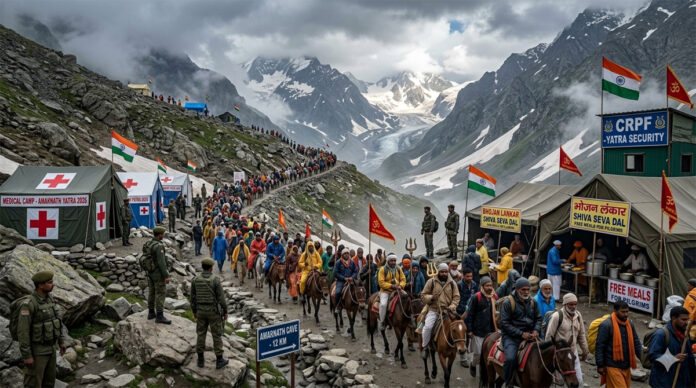
Rental tents are available at major camps, including:
- Nunwan
- Baltal
- Sheshnag
- Panchtarni
These camps provide overnight accommodation for pilgrims.
Free Langar Services
Numerous charitable organizations and NGOs operate free community kitchens throughout the pilgrimage routes, offering:
- Fresh meals
- Drinking water
- Tea
- Light refreshments
Medical Facilities
Medical support is available throughout the pilgrimage.
Facilities include:
- Base hospitals
- Medical aid centers
- Emergency healthcare units
- Oxygen booths
- Ambulance services
Healthcare support is jointly managed by:
- Jammu & Kashmir Health Department
- Indian Army
- Central Armed Police Forces (CAPFs)
- NGOs
Cloak Rooms
Pilgrims can safely store luggage at designated cloak rooms near:
- Base camps
- Holy Cave
Dubai Tourism Hit Hard by Middle East Conflict, Revenues Drop Up to 80% as Hotels, Flights, and Jobs Take a Hit
Parking Facilities
Paid parking is available at Baltal for:
- Two-wheelers
- Cars
- Heavy vehicles
Mobile Connectivity
The pilgrimage route is covered by:
- BSNL
- Jio
- Airtel
SIM cards are also available near base camps.
Pony, Palki, and Porter Services
Pilgrims unable to complete the trek on foot can hire:
- Ponies
- Palkis (palanquins)
- Porters (Pithus)
These services are available at designated points along the official routes.
No Helicopter Service in 2026
Unlike previous years, helicopter services will not operate during Amarnath Yatra 2026.
The government has declared both the Pahalgam and Baltal routes No-Flying Zones from July 1 until the conclusion of the pilgrimage.
Pilgrims must complete the journey:
- On foot
- By pony
- By palki
How to Register for Amarnath Yatra 2026
Online Registration
Pilgrims can register through the official Shri Amarnath Ji Shrine Board (SASB) portal.
Important rules include:
- Maximum four pilgrims can register using one mobile number.
- Registration details cannot be modified after submission.
- Advance online registration is available from July 3 to August 12, 2026.
- Additional dates may be opened later depending on availability.
Mandatory Health Certificate
Every pilgrim must obtain a Compulsory Health Certificate (CHC) from an authorized doctor or hospital approved by their respective state government.
Without a valid health certificate, registration will not be accepted.
Offline Registration
Pilgrims may also register in person.
Offline registration is available:
- At designated registration centers in Jammu
- Through token-based registration
- At more than 500 authorized branches of:
- State Bank of India (SBI)
- Punjab National Bank (PNB)
- Yes Bank
- Jammu & Kashmir Bank
Why Is the RFID Card Mandatory?
One of the biggest changes for Amarnath Yatra 2026 is the mandatory RFID (Radio Frequency Identification) Card.
After completing registration, pilgrims must undergo:
- Biometric e-KYC verification
- RFID card issuance at designated centers
Without the RFID Card:
Pilgrims will not be allowed to cross:
- Domel Check Post
- Chandanwari Check Post
The RFID system enables authorities to monitor pilgrim movement and improve emergency response.
Traffic Advisory for Amarnath Yatra 2026
Jammu & Kashmir Police has issued detailed traffic restrictions.
Important guidelines include:
- Convoy movement will receive priority.
- Traffic near the Navyug Tunnel will be temporarily restricted.
Travel Restrictions
From Kashmir to Jammu
Vehicles cannot cross the Navyug Tunnel before 11:30 AM.
From Jammu to Kashmir
Vehicles cannot enter the Navyug Tunnel after 3:00 PM.
Additional time restrictions will also apply at:
- Mir Bazar
- Srinagar
- Anantnag
- Other designated checkpoints
Travelers are advised to carefully follow official traffic advisories.
Health and Fitness Tips Before the Yatra
Since the pilgrimage involves trekking at high altitude, physical preparation is strongly recommended.
Pilgrims should:
- Walk 4–5 km daily for at least one month before departure.
- Practice yoga and breathing exercises.
- Stay hydrated by drinking around 5 liters of fluids daily.
- Eat carbohydrate-rich meals for sustained energy.
- Descend immediately if symptoms of altitude sickness appear.
- Seek medical assistance at the nearest health center if feeling unwell.
Medical facilities are available approximately every two kilometers along the trekking routes.
What Not to Do During the Pilgrimage
Authorities advise pilgrims to avoid:
- Alcohol consumption
- Smoking
- Caffeinated beverages
- Ignoring symptoms of altitude sickness
- Delaying medical treatment
Common warning signs include:
- Severe headache
- Breathlessness
- Dizziness
- Extreme fatigue
Immediate medical attention should be sought if these symptoms occur.
Essential Packing Checklist
Pilgrims are advised to carry:
Medicines
- Fever medicine
- Pain relievers
- Anti-vomiting tablets
- Personal prescriptions
- First-aid kit
- Bandages
Clothing
- Warm jackets
- Thermal wear
- Woolen socks
- Gloves
Rain Protection
- Raincoat
- Umbrella
- Waterproof shoes
Sun Protection
- Sunscreen
- Sunglasses
- Hat
Trekking Essentials
- Torch or headlamp
- Trekking stick
- Waterproof backpack
- Mobile waterproof cover
Documents
Carry at all times:
- Government-issued photo ID
- Registration slip
- RFID Card
- Health Certificate
Authorities may verify documents at multiple checkpoints.
Enhanced Security Arrangements
Security has been significantly strengthened across the pilgrimage route.
Joint mock drills are being conducted by:
- Central Reserve Police Force (CRPF)
- Jammu & Kashmir Police
- Indian Army
- Other security agencies
- Health Department
- Fire & Emergency Services
- Civil Administration
The drills focus on:
- Emergency response
- Communication systems
- Rescue operations
- Evacuation procedures
- Multi-agency coordination
Women Security Personnel Deployed
Female CRPF personnel have been deployed at the Nunwan Base Camp to manage:
- Security screening
- Frisking of women pilgrims
- Queue management
Anti-Drone Surveillance
Authorities have installed:
- Advanced anti-drone systems
- High-tech surveillance networks
- Continuous monitoring systems
These measures are intended to detect potential threats and ensure rapid response during the pilgrimage.
Key Takeaways
- Amarnath Yatra 2026 will run from July 3 to August 28.
- Pilgrims can choose the Pahalgam or Baltal route.
- Registration requires a Compulsory Health Certificate.
- RFID Cards are mandatory for all pilgrims.
- Helicopter services have been suspended for the 2026 pilgrimage.
- Extensive medical facilities, accommodation, langars, and security arrangements have been put in place.
- Pilgrims are encouraged to prepare physically before undertaking the high-altitude trek and strictly follow official advisories.