Kinshasa, Democratic Republic of the Congo | July 2, 2026
Congo Ebola Outbreak Crosses 1,400 Confirmed Cases as Health Authorities Intensify Emergency Response
Congo Ebola Outbreak continues to worsen, with the Democratic Republic of the Congo reporting more than 1,400 confirmed infections and 438 deaths as authorities race to contain one of the country’s most serious Ebola emergencies in recent years. According to official government figures, the outbreak has spread primarily across the eastern provinces of Ituri, North Kivu, and South Kivu, prompting an expanded public health response supported by national and international partners.
Government officials said the number of confirmed Ebola cases has reached 1,406, while 192 patients have recovered and 609 people remain under treatment. Authorities added that surveillance operations, treatment services, contact tracing, and community engagement activities are continuing across the affected regions.
The outbreak has prompted heightened concern among health authorities because it is unfolding in an area already facing humanitarian challenges, population displacement, and security concerns that complicate disease-control operations.
DR Congo Ebola Outbreak Cases Rise to 635 as Health Officials Intensify Response Efforts
WHO Declares Public Health Emergency
According to government officials, the World Health Organization (WHO) has designated the outbreak as a Public Health Emergency, reflecting growing concern over the rapid spread of infections and the complex operational environment in eastern Congo.
Health authorities say the declaration is intended to strengthen international coordination, mobilize additional medical resources, and accelerate support for surveillance, laboratory testing, treatment centers, and public awareness campaigns.
Officials emphasized that containing Ebola requires rapid identification of infected individuals, timely isolation, effective clinical care, and comprehensive tracing of close contacts to interrupt transmission chains.
Eastern Provinces Remain the Epicenter
The current outbreak remains concentrated in Ituri, North Kivu, and South Kivu, provinces that have experienced repeated Ebola outbreaks over the past decade.
These regions present unique operational challenges due to difficult terrain, remote communities, large population movements, and continuing security concerns that often restrict access for healthcare workers.
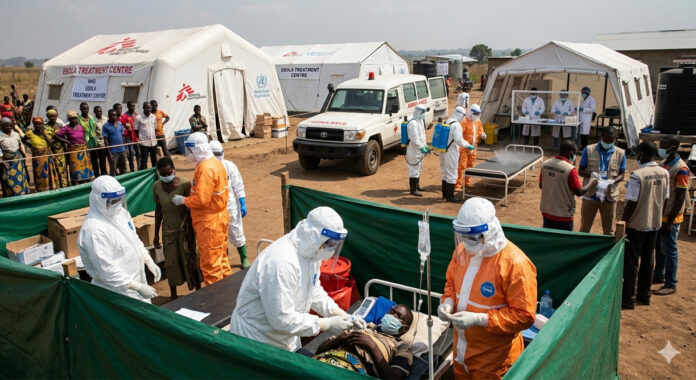
Medical teams continue operating treatment centers while conducting active surveillance in villages and urban communities where new infections have been detected.
Authorities say response teams are working around the clock to identify suspected cases, transport patients safely, disinfect affected areas, and educate communities about infection prevention measures.
WHO Declares Ebola Emergency as India Warns Citizens Against Travel to Congo, Uganda and South Sudan
Government Expands Emergency Response Capacity
The Congolese government said it has strengthened emergency operations by deploying additional ambulances and transport vehicles to affected areas while increasing supplies of medicines and personal protective equipment (PPE).
Officials also reported expanding public awareness campaigns designed to encourage early reporting of symptoms and reduce community transmission.
Response efforts currently focus on:
- Active disease surveillance
- Contact tracing
- Laboratory testing
- Emergency treatment centers
- Ambulance deployment
- Distribution of medicines
- Personal protective equipment (PPE)
- Community education campaigns
- Infection prevention and control measures
Health authorities said cooperation between local communities, healthcare workers, humanitarian organizations, and international partners remains essential for slowing transmission.
International Experts Warn of Continuing Risks
According to government officials citing international health partners, several factors continue to complicate containment efforts.
These include:
- Persistent insecurity in eastern Congo
- High levels of internal population movement
- Pressure on healthcare facilities
- Challenges in identifying and monitoring contacts
- Remote communities with limited healthcare access
Public health experts have repeatedly warned that delayed identification of infected individuals increases the likelihood of additional community transmission.
The government said surveillance teams continue monitoring thousands of contacts while expanding laboratory testing capacity across affected provinces.
India Issues Ebola Alert After WHO Declares Global Health Emergency Over Africa Outbreak
What Is Ebola?
Ebola is a rare but severe viral disease that can cause life-threatening illness in humans.
The virus is believed to spread initially from infected wild animals to humans before being transmitted through direct contact with the blood or other bodily fluids of infected individuals.
Healthcare workers remain at elevated risk without proper infection-control measures, making protective equipment and specialized training critical components of outbreak response.
Although Ebola is highly dangerous, experts emphasize that prompt diagnosis, supportive medical care, and strict infection-control practices significantly improve survival rates and reduce further spread.
Congo Ebola Outbreak: Symptoms, Response Measures, and Ongoing Challenges
Symptoms Can Appear Within Two to 21 Days
Health authorities continue to urge residents in affected regions to seek immediate medical attention if they develop symptoms associated with Ebola. According to public health guidance, symptoms generally appear between two and 21 days after exposure to the virus.
Early symptoms often resemble influenza or other viral illnesses, making early diagnosis challenging. Patients typically experience:
- Sudden high fever
- Severe fatigue and weakness
- Muscle and joint pain
- Intense headache
- Sore throat
As the disease progresses, symptoms may become more severe and include:
- Persistent vomiting
- Diarrhea
- Abdominal pain
- Dehydration
- Organ dysfunction
- Unexplained internal or external bleeding in severe cases
Medical experts emphasize that early diagnosis, rapid isolation, supportive treatment, and careful monitoring significantly improve patient outcomes while helping prevent further transmission.
India on Ebola Alert: Centre Reviews Preparedness, Confirms No Cases Detected So Far
Bundibugyo Ebola Virus Presents Additional Challenges
Officials said the current outbreak involves the Bundibugyo strain of the Ebola virus, which was confirmed in outbreaks reported in the Democratic Republic of the Congo and Uganda during May 2026.
According to health authorities, there is currently no widely approved vaccine or specific antiviral treatment available for the Bundibugyo strain. Researchers and international health organizations continue evaluating experimental vaccines and therapeutic candidates, while supportive clinical care remains the primary treatment approach.
Healthcare providers are focusing on fluid replacement, electrolyte management, treatment of secondary infections, nutritional support, and intensive monitoring for patients admitted to Ebola treatment centers.
Humanitarian Crisis Complicates Containment Efforts
The Ebola outbreak is unfolding against the backdrop of an already complex humanitarian situation in eastern Congo.
Years of armed conflict, internal displacement, fragile healthcare infrastructure, and difficult transportation networks have complicated emergency medical operations. Health officials say insecurity in several districts has slowed surveillance activities, delayed access to affected communities, and made contact tracing more difficult.
Frequent cross-border movement and commercial activity also increase the challenge of preventing further spread, requiring close coordination among national authorities, neighboring countries, humanitarian organizations, and international public health agencies.
Officials continue urging communities to cooperate with surveillance teams, report symptoms promptly, and follow infection-prevention guidance to reduce transmission risks.
Community Engagement Remains Critical
Public health officials say community participation is one of the most important factors in controlling Ebola outbreaks.
Authorities are expanding education campaigns to improve awareness about:
- Recognizing Ebola symptoms.
- Seeking early medical care.
- Avoiding direct contact with infected bodily fluids.
- Following safe caregiving practices.
- Supporting contact-tracing efforts.
- Reporting suspected cases immediately.
Healthcare workers are also working with local leaders, religious organizations, and community volunteers to strengthen public trust and reduce misinformation surrounding the outbreak.
Officials believe that sustained public cooperation will play a decisive role in interrupting chains of transmission.
International Response Continues
Government agencies continue working alongside international organizations and humanitarian partners to strengthen the national response.
Current priorities include:
- Expanding laboratory testing capacity.
- Increasing treatment-center availability.
- Delivering medicines and medical supplies.
- Deploying additional healthcare personnel.
- Supporting surveillance and contact tracing.
- Protecting frontline healthcare workers with adequate PPE.
- Improving logistics for remote communities.
Health authorities say international cooperation remains essential because Ebola outbreaks require coordinated surveillance, rapid information sharing, and sustained financial and technical support.
Outlook
Although response operations have intensified since the outbreak was declared in mid-May, officials caution that the situation remains fluid.
The combination of ongoing transmission, humanitarian challenges, population mobility, and security concerns means new cases may continue to emerge while surveillance expands.
Authorities say controlling the outbreak will depend on rapid case identification, effective treatment, comprehensive contact tracing, community cooperation, and continued international assistance.
While emergency teams have strengthened their response capacity, health officials stress that vigilance remains essential until transmission is fully interrupted.
Key Takeaways
- The Congo Ebola Outbreak has reached 1,406 confirmed cases.
- Government figures report 438 deaths, 192 recoveries, and 609 patients currently receiving treatment.
- The outbreak is concentrated in Ituri, North Kivu, and South Kivu.
- Authorities say the World Health Organization has declared the outbreak a Public Health Emergency.
- Response efforts include surveillance, treatment, contact tracing, PPE distribution, ambulance deployment, and public awareness campaigns.
- The outbreak involves the Bundibugyo strain of Ebola, for which health authorities say no widely approved vaccine or targeted treatment is currently available.
Frequently Asked Questions
What is the current Congo Ebola Outbreak?
According to official government figures, the outbreak has resulted in 1,406 confirmed cases and 438 deaths, primarily affecting eastern provinces.
Which areas are most affected?
The outbreak is concentrated in Ituri, North Kivu, and South Kivu in eastern Democratic Republic of the Congo.
How does Ebola spread?
Ebola spreads through direct contact with the blood or other bodily fluids of an infected person or contaminated materials.
What are the first symptoms of Ebola?
Early symptoms include fever, fatigue, muscle pain, headache, and sore throat. Severe illness may progress to vomiting, diarrhea, abdominal pain, organ failure, and bleeding.
Is there a vaccine for this outbreak?
Officials say the outbreak involves the Bundibugyo Ebola virus, for which research on vaccines and treatments is ongoing.