Washington, D.C. – June 11, 2026
Dalai Lama Succession has once again emerged as a major issue in US-China relations after senior Republican lawmakers introduced an amendment aimed at reinforcing American policy that the selection of the next Dalai Lama is solely a religious matter to be determined by Tibetan Buddhist authorities, not the Chinese government.
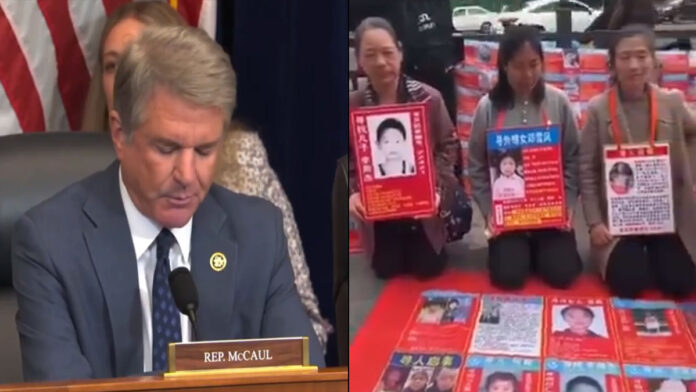
The proposal was presented during a meeting of the House Foreign Affairs Committee, where Chairman Michael McCaul urged fellow lawmakers to support the amendment. The measure seeks to strengthen existing US policy and make clear that Washington recognizes the Dalai Lama’s succession process as a spiritual decision that belongs exclusively to Tibetan Buddhist institutions.
The move comes amid growing concerns that China could attempt to install a successor loyal to the Chinese Communist Party (CCP), potentially influencing the future of Tibetan Buddhism and expanding Beijing’s influence across the Himalayan region.
McCaul Recalls Meeting With the Dalai Lama in India
Speaking before the committee, McCaul referenced a bipartisan congressional delegation he led to Dharamshala in 2024, where he met the Tibetan spiritual leader, Dalai Lama.
McCaul described the Dalai Lama as one of the most extraordinary individuals he has encountered, praising his warmth, wisdom, and sense of humor.
Reflecting on their conversation, the congressman recalled the Dalai Lama joking that he planned to live until the age of 110. While expressing hope that the spiritual leader enjoys many more years of good health, McCaul argued that policymakers cannot ignore the long-term question of succession.
According to the lawmaker, planning for the future leadership of Tibetan Buddhism remains essential regardless of the Dalai Lama’s current health and longevity.
Concerns Over China’s Role in Selecting a Successor
The central focus of the amendment is the growing concern that Beijing could attempt to influence or control the process of identifying the next Dalai Lama.
McCaul noted that the current Dalai Lama has repeatedly stated that his reincarnation would occur in a free environment and not under Chinese control. As discussions about succession continue, lawmakers believe the issue has become increasingly significant for both religious freedom and international diplomacy.
The congressman accused China of preparing to exert authority over the succession process.
He pointed to regulations introduced by the Chinese government in 2007 that grant Beijing what it describes as the authority to approve the reincarnation of certain Tibetan Buddhist leaders.
Critics argue that such policies allow an officially atheist government to intervene in deeply spiritual and religious matters traditionally governed by Tibetan Buddhist institutions.
US Policy Built on Previous Tibet Legislation
McCaul emphasized that the proposed amendment builds upon the bipartisan Tibetan Policy and Support Act of 2020, which established a framework for US engagement on Tibetan issues.
Under that law, the United States formally stated that decisions regarding the identification and recognition of a future Dalai Lama should be made solely by Tibetan Buddhist leaders without interference from external governments.
The latest amendment seeks to reinforce that position by making clear that US foreign policy recognizes only a succession process determined by the Dalai Lama’s office and senior Tibetan religious authorities.
According to supporters of the measure, Beijing should have no role in selecting the next Tibetan spiritual leader.
Religious Freedom and Strategic Interests Intersect
While the debate centers on religious freedom, McCaul argued that the issue also carries significant geopolitical implications.
He described the succession question as not only a matter of faith but also a national security concern with broader consequences for regional stability.
Lawmakers supporting the amendment believe that if China succeeds in promoting a government-approved successor, Beijing could gain additional influence among Tibetan communities and across strategically important areas near the Himalayan border.
These concerns extend beyond Tibet itself and include neighboring countries and regions where Tibetan Buddhism plays an important cultural and religious role.
Potential Impact on the Himalayan Region
Supporters of the amendment warned that a Chinese-backed successor could become a powerful instrument of political influence.
McCaul argued that Beijing could use such a figure to expand its reach across the Himalayan region, including areas bordering key US partners and allies.
The congressman specifically referenced concerns about Chinese influence near India’s northern frontier, as well as in countries such as Nepal and Mongolia, where Tibetan Buddhist traditions maintain significant cultural relevance.
Analysts have long viewed the succession of the Dalai Lama as one of the most sensitive future issues in Asian geopolitics due to its religious, cultural, and strategic dimensions.
Tibetan Authorities Insist on Independent Process
The Dalai Lama has previously outlined principles regarding how his successor should be identified after his passing.
According to Tibetan Buddhist traditions, the process involves senior religious leaders and institutions responsible for recognizing reincarnations of prominent spiritual figures.
Supporters of the US amendment argue that respecting those traditions is essential to preserving the authenticity and legitimacy of Tibetan Buddhism.
The proposed measure seeks to ensure that future US administrations continue to support an independent and religiously guided succession process.
Growing International Attention on the Succession Debate
As the Dalai Lama approaches his later years, questions about succession are increasingly drawing international attention.
Governments, religious organizations, and human rights advocates continue to monitor developments surrounding Tibet’s future spiritual leadership.
For many observers, the issue represents a broader test of religious freedom, cultural autonomy, and the balance between state authority and spiritual traditions.
The latest congressional initiative signals that the United States intends to maintain its position that Dalai Lama Succession should remain exclusively in the hands of Tibetan Buddhist authorities and not be subject to political influence from Beijing.
With tensions between Washington and Beijing already elevated on multiple fronts, the future leadership of Tibetan Buddhism is likely to remain a significant issue in international diplomacy for years to come.
Source: Statements made by House Foreign Affairs Committee Chairman Michael McCaul during committee discussions on amendments related to US Tibet policy and the future succession of the Dalai Lama.