BÜRGENSTOCK, SWITZERLAND — June 22, 2026
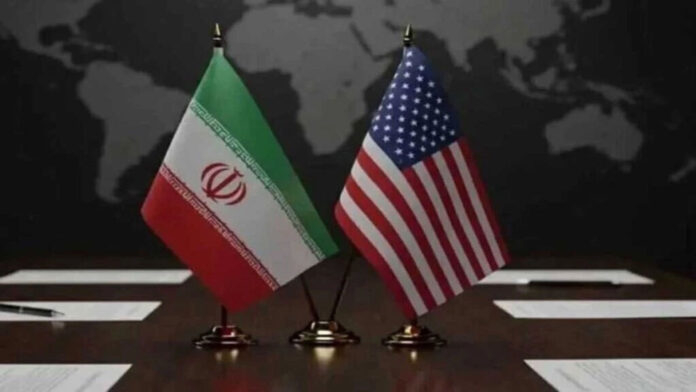
US-Iran technical talks entered a crucial new phase in Switzerland on Sunday, with negotiators from Washington and Tehran completing the first round of detailed discussions centered on the Lebanon ceasefire, the status of the Strait of Hormuz, and key elements of a possible new nuclear agreement. Officials familiar with the talks indicated that both sides came away broadly satisfied with the opening round and agreed to continue the process at both the political and technical levels.
The discussions are part of a broader diplomatic effort launched under a 14-point memorandum of understanding aimed at preventing a wider regional escalation while also opening a structured 60-day window for talks on Iran’s nuclear program, sanctions relief, and conflict de-escalation across multiple fronts. Sunday’s meeting at the Bürgenstock resort came after several days of uncertainty, including a temporary delay in the talks, public threats from President Donald Trump, and renewed friction over southern Lebanon and shipping security in the Gulf.
Lebanon ceasefire enforcement emerged as a central issue
One of the main items on the table during the first round was the fragile ceasefire environment in Lebanon, where recent Israeli military action in the south and continued tensions involving Hezbollah have threatened to destabilize the broader diplomatic track. According to reporting from Axios and follow-up coverage from other outlets, negotiators discussed what were described as “deconfliction mechanisms” and ways to enforce or preserve the Lebanon ceasefire while preventing fresh escalation.
That issue has taken on outsized importance because the US-Iran negotiating framework is no longer limited to nuclear diplomacy alone. Instead, it has become deeply intertwined with regional flashpoints, especially Lebanon, where any major violation of the ceasefire could quickly spill into a wider confrontation and derail the political process in Switzerland. For Washington, stabilizing the Lebanon front is seen as essential to keeping the larger agreement alive; for Tehran, the treatment of Hezbollah and Israeli military actions in southern Lebanon remain politically and strategically inseparable from the broader talks.
Strait of Hormuz concerns added urgency to the talks
The other major focus of the US-Iran technical talks was the Strait of Hormuz, one of the world’s most critical energy shipping routes. The issue took on renewed urgency after Iran signaled in recent days that the strait could be closed again amid continued regional tensions, even as US officials publicly disputed whether commercial traffic had actually been halted.
According to a US diplomat cited in reports on the talks, Washington made clear during the discussions that it wants the strait to remain fully open and that progress had been made in clarifying the situation. The question is central not just to US-Iran relations, but to global energy markets and international shipping, since roughly one-fifth of the world’s traded oil and a significant share of liquefied natural gas flows through the narrow waterway. Any real disruption—or even uncertainty around access—has the potential to rattle markets far beyond the Middle East.
The Hormuz issue has also become a test of trust between the two sides. Tehran has used the strait as a strategic lever in past crises, while Washington is trying to ensure that any interim peace framework is backed by practical stability on the ground and at sea. That made the Swiss talks as much about crisis management as about long-term diplomacy.
Nuclear deal elements and implementation details were also discussed
Beyond Lebanon and Hormuz, the talks reportedly covered the technical architecture of a possible future US-Iran nuclear agreement. Diplomats and mediators have described the current process as an attempt to move from a broad political understanding to a more detailed and enforceable framework. That includes questions surrounding Iran’s nuclear enrichment, international monitoring, sanctions relief, the fate of frozen Iranian funds, and the sequencing of commitments by both sides.
Reports suggest the first round also examined how to implement the 14-point memorandum and how to align the expectations of all parties involved in the mediation effort. This matters because the negotiations are not taking place in a vacuum. Pakistan and Qatar have played visible roles as intermediaries, and both governments are trying to keep the process on track despite repeated flare-ups in Lebanon and mixed messaging around Iran’s regional posture.
In practical terms, the technical talks are where the broad political promises now have to be translated into operational language. That includes defining what counts as compliance, how verification would work, what timeline would govern sanctions relief, and how to handle issues—like Hezbollah and maritime security—that sit at the intersection of military confrontation and diplomatic negotiation.
Why the talks were briefly paused
Before Sunday’s full-day discussions gained momentum, the process had already run into turbulence. Earlier reporting indicated that a previous session of the talks had been temporarily paused after roughly 80 minutes to allow both delegations to consult internally. Other reports suggested the broader negotiating schedule had been disrupted by renewed tensions over Lebanon and confusion surrounding the Strait of Hormuz.
Despite that, the current signal from mediators and officials involved in the process is that the talks have not broken down. Instead, they appear to have shifted into a more flexible format, with political meetings, technical sessions, and backchannel consultations all running in parallel. That has allowed negotiators to keep the process alive even as public rhetoric from both sides has remained tense.
JD Vance’s role adds political weight to the negotiations
The talks also carry unusual political weight because Vice President JD Vance has taken a visible role in the process. Vance traveled to Switzerland to help launch the next phase of negotiations and has publicly framed the effort as an opportunity to fundamentally reset US-Iran relations if the talks succeed. Reports indicate he joined top envoys including Steve Witkoff and other senior US officials as Washington tried to balance diplomacy with deterrence.
Vance’s involvement matters because it signals that the White House sees the talks as more than a routine diplomatic contact. The administration is treating them as a strategic test: can the US contain the nuclear issue, keep the Lebanon ceasefire from collapsing, and secure freedom of navigation through Hormuz without sliding back into direct confrontation with Iran? That is a far more ambitious agenda than a single-issue nuclear negotiation.
All sides signal cautious satisfaction, but the hard part lies ahead
Officials briefed on the talks said all parties appeared broadly satisfied with the opening round and agreed on a framework to continue discussions. Technical teams are expected to remain in Switzerland to keep working through the details, while the political track may continue separately depending on how the next 24 to 48 hours unfold.
Still, any optimism remains cautious. The first round may have succeeded in getting both sides to stay engaged, but the core issues remain extraordinarily difficult. Lebanon’s ceasefire remains fragile, the status of the Strait of Hormuz is still politically charged, and a nuclear deal would require detailed commitments on enrichment, verification, sanctions, and regional conduct—areas where US and Iranian positions have historically diverged sharply.
For now, however, the key takeaway is that the US-Iran technical talks did not collapse under the weight of regional tensions. Instead, they produced enough movement to keep the diplomatic track alive. Whether that turns into a lasting breakthrough—or merely buys time before the next crisis—will depend on what happens in Switzerland over the coming days and on whether the region’s multiple flashpoints can be contained long enough for negotiators to turn a fragile framework into a workable deal.