New Delhi, India — May 27, 2026
Illegal Infiltration and Demographic Change in India have emerged as a major national concern after the Ministry of Home Affairs stated that abnormal demographic shifts linked to illegal migration are no longer restricted to border districts and are now impacting urban centers, industrial corridors, tribal regions, and socially sensitive areas across the country.
In a significant move, the central government has constituted a High-Level Committee on Demographic Changes to conduct a comprehensive investigation into population pattern shifts and the broader impact of illegal infiltration and unregulated migration. The committee will be chaired by retired Supreme Court judge Justice Prakash Prabhakar Naolekar and is expected to submit its report within one year.
The development comes amid growing debate over border security, illegal immigration, internal migration patterns, and the long-term socio-economic implications of demographic transformations in multiple Indian states.
Home Ministry Flags Unusual Population Changes
According to an official notification issued by the Ministry of Home Affairs, several regions in India have witnessed demographic changes that cannot be explained solely through normal birth or death rates.
The ministry noted that factors such as illegal infiltration, irregular settlement patterns, unchecked population movement, and administrative negligence may be contributing to these shifts.
Officials stated that the impact is increasingly visible in the functioning of public services, local governance systems, distribution of welfare resources, and maintenance of social balance.
The ministry further emphasized that the demographic impact has spread beyond border regions and is now affecting major cities, industrial zones, tribal belts, and strategically sensitive areas.
This marks one of the strongest official acknowledgments by the government regarding concerns linked to demographic restructuring caused by illegal migration and unregulated settlement activities.
Amit Shah Announced Formation of the Committee
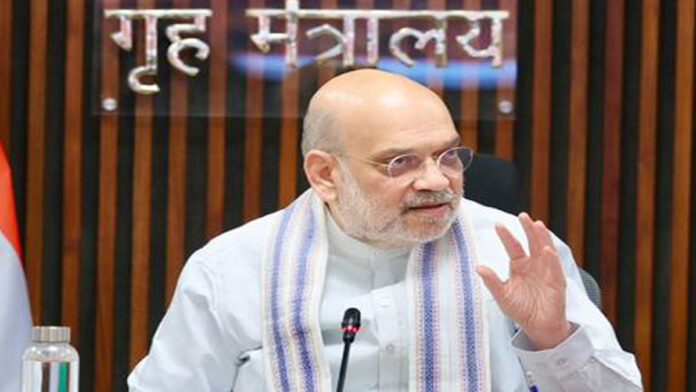
Union Home Minister Amit Shah had announced the formation of the committee on Tuesday, describing the issue as a matter of national importance requiring detailed study and policy recommendations.
The committee will function from its headquarters in New Delhi and will include senior experts and former top bureaucrats as members.
The panel includes:
- Former IAS officer Durga Shankar Mishra
- Former IPS officer Balaji Srivastava
- Economist and policy expert Dr. Shamika Ravi
- The Census Commissioner of India
The committee has been tasked with conducting nationwide consultations, reviewing demographic data, and examining administrative mechanisms related to migration and population monitoring.
Key Areas the Committee Will Examine
The newly formed High-Level Committee on Demographic Changes will focus on several critical issues connected to demographic transformation and illegal infiltration.
1. Illegal Infiltration and Cross-Border Movement
The panel will investigate patterns of illegal migration and cross-border infiltration, especially in vulnerable regions with high undocumented population movement.
2. Abnormal Settlement Trends
Authorities will study unusual settlement patterns in urban clusters, border districts, tribal areas, and economically strategic regions.
3. Economic Migration and Industrial Corridors
The committee will analyze whether economic opportunities and industrial development corridors are contributing to sudden population shifts in specific zones.
4. Social and Environmental Factors
Population movement triggered by environmental changes, climate conditions, social instability, and regional economic disparities will also be reviewed.
5. Changes in Religious and Social Demographic Structures
The panel will assess demographic changes within different religious and social communities and their broader implications for governance and policy planning.
Recommendations on Identification and Deportation of Illegal Migrants
One of the most significant mandates given to the committee is the formulation of recommendations regarding the identification, detention, and deportation of illegal migrants residing in India.
The ministry said the committee would suggest:
- Legal frameworks for identifying undocumented migrants
- Administrative systems for verification and detention
- Coordination mechanisms between state and central agencies
- Measures to streamline deportation procedures
- Improved documentation and identity verification systems
The panel is also expected to study international best practices in border management and migration control.
Focus on Border Management and National Security
The Ministry of Home Affairs underlined that strengthening border management will remain a central priority for the committee.
Officials said recommendations would likely include:
- Enhanced surveillance systems
- Better coordination between border security agencies
- Use of technology-driven identification systems
- Improved monitoring of internal migration patterns
- Strengthened demographic data analysis
The government is also expected to explore policies related to population stabilization and resource planning to address the long-term administrative challenges arising from rapid demographic shifts.
Security analysts believe the committee’s findings could influence future national policies on immigration, citizenship verification, border control, and internal population management.
Growing Debate Over Demographic Balance
The issue of demographic change has increasingly become part of national political and policy discussions in recent years.
Several states have raised concerns regarding illegal migration, changing voter demographics, pressure on welfare infrastructure, and the burden on urban services. The central government’s latest move signals an attempt to address these concerns through institutional review and data-backed policy recommendations.
Experts note that demographic changes can affect multiple sectors, including:
- Housing and urban infrastructure
- Employment opportunities
- Healthcare and education systems
- Resource allocation
- Electoral representation
- Social harmony and local governance
The committee’s report is expected to provide a clearer assessment of how demographic changes are occurring and what measures may be required to address emerging challenges.
Committee Expected to Shape Future Migration Policy
The formation of the High-Level Committee on Demographic Changes is being viewed as a potentially significant step toward redefining India’s migration management framework.
Policy observers believe the committee’s recommendations may eventually contribute to:
- New border management strategies
- Updated migration monitoring systems
- Enhanced inter-state coordination
- Stronger population documentation frameworks
- Revised administrative procedures for illegal infiltration cases
The committee is expected to submit its final findings to the central government within the next twelve months.