WASHINGTON, D.C. — May 20, 2026
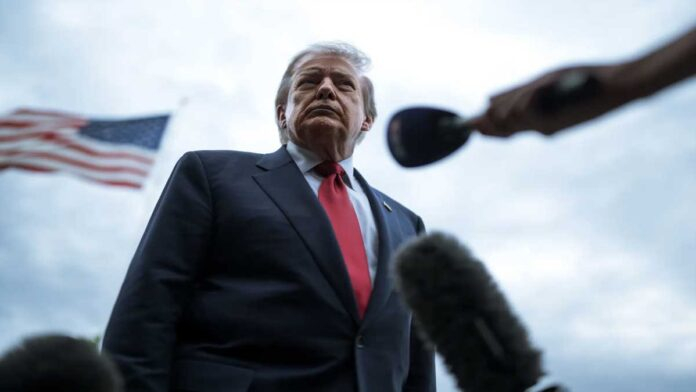
In a major political setback for Donald Trump, the US Senate has approved a resolution aimed at limiting the president’s authority to launch military action against Iran without congressional approval.
The measure passed the Senate in a narrow 50-47 vote, marking the first successful attempt after seven previous failed efforts to curb presidential war powers related to Iran. The resolution received support from four Republican senators who broke ranks with Trump and voted alongside Democrats.
The Republican lawmakers who backed the proposal were Susan Collins, Lisa Murkowski, Rand Paul, and Bill Cassidy.
The resolution was introduced by Tim Kaine, who argued that military action against Iran should require formal authorization from Congress unless the United States faces an immediate threat.
Under the proposal, the president would be prohibited from engaging US armed forces in hostilities against Iran unless Congress formally declares war or passes specific authorization for the use of military force. The measure is designed to reinforce Congress’ constitutional authority over war powers and military engagement decisions.
The Senate vote comes at a sensitive moment as Washington and Tehran continue indirect diplomatic discussions aimed at reducing tensions and preventing a broader regional conflict.
Democratic lawmakers celebrated the vote as a constitutional victory and a pushback against unilateral military action.
California Democratic Senator Adam Schiff said on social media that Senate Democrats had once again acted to stop what he described as an “unconstitutional war.” He also thanked Republican senators who joined the effort, saying they fulfilled their constitutional responsibilities.
Independent Senator Bernie Sanders also praised the outcome, arguing that American taxpayers do not want billions of dollars spent on “endless wars” abroad while domestic crises continue to grow.
The Senate action follows comments made earlier this week by Trump regarding a planned military strike on Iran that was ultimately postponed.
According to Trump, leaders from key Gulf nations privately urged the White House to delay military action to allow ongoing diplomatic negotiations to continue. Trump said appeals came from Tamim bin Hamad Al Thani, Mohammed bin Salman, and Mohamed bin Zayed Al Nahyan.
In a statement posted on his Truth Social platform, Trump said the Gulf leaders believed a “strong agreement” with Iran was still possible if talks were allowed to continue.
At the same time, Trump made clear that any future agreement would require one central condition: Iran must never obtain nuclear weapons.
The president said he had instructed Defense Secretary Pete Hegseth and Chairman of the Joint Chiefs of Staff General Daniel Caine to suspend the planned military operation out of respect for ongoing diplomatic efforts.
Despite postponing military action, Trump warned that the US military remains on high alert. He stated that if negotiations fail to produce an acceptable agreement, American forces are prepared to launch a “full-scale assault” against Iran on short notice.
The Senate resolution now intensifies debate in Washington over presidential war powers, congressional oversight, and the future of US policy toward Iran amid rising geopolitical tensions in the Middle East.