TEHRAN, Iran — May 11, 2026
Tensions in the strategically critical Strait of Hormuz escalated sharply after Iran warned Britain and France against expanding their maritime security presence in the region following a series of attacks on commercial vessels in the Persian Gulf.
The latest diplomatic confrontation comes after reports emerged of a mysterious attack on a South Korean commercial ship near the Strait of Hormuz, intensifying global concerns over the safety of one of the world’s most important oil shipping routes.
Iran has now accused European powers of violating international law and warned of an “immediate and decisive” military response if foreign forces cooperate with what Tehran described as unlawful US actions in the region.
Iran Rejects British-French Maritime Security Initiative
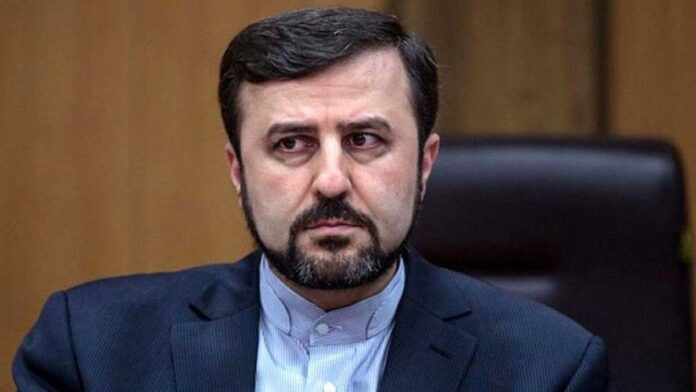
Iranian Deputy Foreign Minister Kazem Gharibabadi strongly criticized the proposed British-French maritime initiative aimed at strengthening shipping security after the ongoing regional conflict ends.
In a statement posted on social media, Gharibabadi said the presence of French and British vessels in the Strait of Hormuz would be viewed by Tehran as a violation of international law.
He warned that if European nations take “even one step” in support of any alleged illegal American operation, Iran’s armed forces would respond immediately.
The warning reflects growing friction between Iran and Western powers as military activity and shipping threats continue to increase in Gulf waters.
France Says Mission Is Not a Military Deployment
Amid rising tensions, French President Emmanuel Macron attempted to ease concerns surrounding the proposed operation.
Macron said the initiative should not be viewed as a military deployment but rather as an international mission designed to protect shipping lanes and stabilize maritime trade routes once conditions improve.
Despite the clarification, uncertainty over security conditions in the region remains high as repeated attacks on commercial vessels continue to raise alarm among global shipping operators and energy markets.
US Suspends Commercial Escort Operations
The United States has also reportedly paused its naval guidance mission for commercial vessels operating in the Persian Gulf due to escalating security threats.
The Strait of Hormuz remains one of the world’s most sensitive maritime chokepoints, carrying a significant portion of global oil exports every day.
Military analysts warn that any disruption in the narrow waterway could trigger major consequences for international energy markets and global trade flows.
The increasing naval presence of Iran and Western countries in the region has fueled fears of a possible direct military confrontation.
South Korean Ship Attack Deepens Security Concerns
Adding to regional anxiety, South Korea has now disclosed details from its investigation into last week’s attack on one of its commercial vessels near the Strait of Hormuz.
According to the report, the ship was stationary in the waterway when two unidentified flying objects struck it approximately one minute apart.
The attack reportedly caused a massive explosion and fire onboard the vessel.
No organization or country has claimed responsibility for the incident so far, and investigations remain ongoing.
The incident has intensified international concerns over maritime security in the Gulf as commercial shipping companies reassess operational risks in the region.
Global Oil Markets Watching Hormuz Closely
The latest developments have once again placed the Strait of Hormuz at the center of geopolitical and economic tensions.
Any escalation involving Iran, European naval forces or the United States could significantly impact global crude oil supplies and energy prices.
Shipping companies and governments are closely monitoring the situation as fears grow over further attacks targeting commercial vessels in one of the world’s busiest energy corridors.