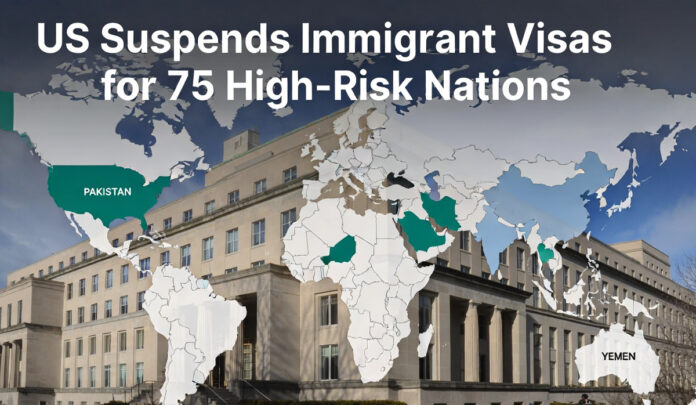
Washington, D.C., January 15, 2026: In a significant immigration policy shift, the Trump administration has announced a temporary suspension of immigrant visas for nationals from 75 designated “high-risk” countries, including Pakistan, Bangladesh, Afghanistan, Syria, Iran, Iraq, Nepal, Somalia, Libya, Yemen, Russia, Egypt, and several others. The decision, issued by the US State Department, will come into effect on January 21.
According to the State Department, individuals from these countries “show an unacceptable level of dependence on US public welfare programs.” The suspension aims to block the entry of immigrants who, the administration believes, may rely on government assistance after arriving in the United States.
Tourist, Student & Temporary Work Visas Not Affected
Officials clarified that the restrictions apply only to immigrant visas—issued to those intending to live permanently in the United States.
Non-immigrant visas, including:
Tourist (B1/B2)
Business
Medical
Student (F/M)
Exchange visitor
Temporary work visas
will not be affected by the new rule.
Who Falls Under the Immigrant Visa Ban?
The suspension impacts applicants such as:
Spouses of US citizens
Fiancés/fiancées of US citizens
Family-based green card applicants
Certain employment-based immigrants
The State Department confirmed that applicants from the affected nations may still submit applications and attend interviews, but immigrant visas will not be issued during the suspension period.
Exemptions:
Individuals from these 75 countries who hold valid citizenship and passports of another nation not on the list are exempt from the ban.
A White House post on X (formerly Twitter) reiterated the administration’s stance, stating the measure will remain in place “until it is ensured that new immigrants do not become a burden on American taxpayers,” signing off with the message: “America First.”
New Screening Rules Based on ‘Public Charge’ Criteria
This move follows a November 2025 directive instructing US consulates worldwide to enforce expanded screening protocols under the “public charge” provision of US immigration law.
Consular officers were advised to deny visas to applicants who may depend on public benefits, using criteria such as:
Health condition
Age
English language proficiency
Financial status
Long-term medical care requirements
The newly implemented framework marks one of the most extensive immigration filtering systems introduced in recent years.