Muscat, Oman — February 6, 2026
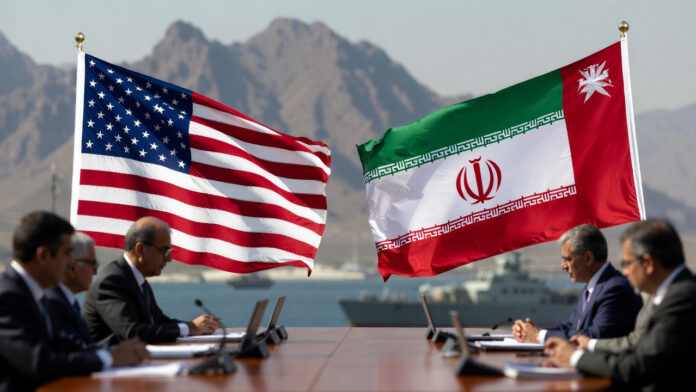
With only hours remaining, global attention is firmly fixed on the high-stakes talks between the United States and Iran scheduled in Oman on Friday, seen as a rare diplomatic opening amid escalating tensions in West Asia.
The talks come at a critical moment, as anti-government protests in Iran, sustained military warnings from Washington, and heightened regional instability have pushed both sides to the brink. Diplomats and analysts alike are asking whether dialogue can lead to de-escalation—or whether failure could trigger a more dangerous phase in the standoff.
Why the Oman Talks Matter
The negotiations mark the first significant opportunity in weeks for United States and Iran to engage directly, following prolonged verbal escalation. Iran agreed to talks under specific conditions, aiming to reduce the risk of potential US military action.
The situation has become increasingly volatile, with military movements, diplomatic pressure, and warnings intensifying across the region.
Nuclear Program at the Center of Dispute
At the heart of the talks lies Iran’s nuclear program, along with concerns over missile development and regional influence. Donald Trump has repeatedly warned that Iran must agree to restrictions on its nuclear activities, cautioning that “very bad things” could happen if it does not.
To reinforce this message, the United States has deployed aircraft carriers and additional military assets to West Asia, signaling its readiness to escalate if diplomacy fails.
Iran Sets Conditions for Talks
According to media reports, the talks will take place in Oman under carefully defined terms. Iranian President Masoud Pezeshkian has instructed Foreign Minister Abbas Araghchi to engage in dialogue only if the environment is free from threats and unrealistic demands.
In a post on social media platform X, Pezeshkian said he had directed his foreign minister to hold fair and balanced talks grounded in dignity, rationality, and practicality, provided conditions are respectful.
Iran Issues Strong Military Warning
Even as diplomacy unfolds, Tehran has sent a clear message on defense preparedness. Iranian Army Chief Abdolrahim Mousavi stated that Iran has upgraded its ballistic missile systems and is fully prepared to confront any threat.
He warned that Iran’s new military doctrine goes beyond defense, emphasizing offensive and asymmetric warfare, and said any hostile action would be met with a “crushing response.”
Israel’s Pressure Adds Complexity
The talks are further complicated by pressure from Israel, whose leadership has urged Washington to remain skeptical of Iran’s intentions and impose strict conditions in any agreement.
This backdrop recalls the collapse of the Joint Comprehensive Plan of Action (JCPOA), from which the US withdrew in 2018. Since then, Iran has significantly increased uranium enrichment, raising alarm across the international community.
What’s at Stake
The core challenge now is determining whether and how previous nuclear commitments can be rolled back. A successful outcome could ease regional tensions, while a breakdown in talks may intensify military confrontation and destabilize West Asia further.
As diplomats gather in Oman, the outcome of these talks could shape regional security—and global geopolitics—for months to come.