TEHRAN, July 5 —
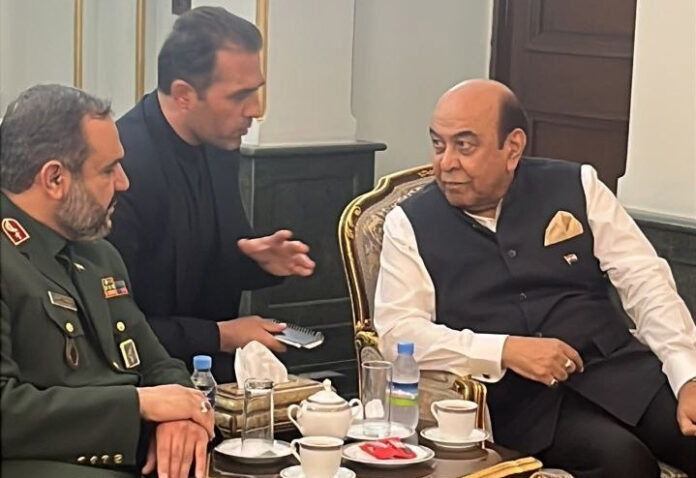
India Tribute to Ayatollah Ali Khamenei was marked by the presence of a high-level Indian delegation at the funeral ceremonies in Tehran, where Minister of State for External Affairs Pabitra Margherita and Bihar Governor Lt. Gen. (Retd.) Syed Ata Hasnain paid homage to the late Iranian Supreme Leader on behalf of the Government and the people of India.
The visit underscored India’s continued diplomatic engagement with Iran and reflected the long-standing civilizational relationship shared by the two countries during a period of political transition in Tehran.
Iran Sets July 4 Start Date for Ayatollah Ali Khamenei Funeral, Burial to Take Place in Mashhad on July 9
India Represented at High-Level State Funeral
Minister of State for External Affairs Pabitra Margherita confirmed India’s participation through a post on social media platform X.
He stated that he, along with Bihar Governor Lt. Gen. (Retd.) Syed Ata Hasnain, represented India at the funeral ceremony of Ayatollah Seyyed Ali Khamenei in Tehran and conveyed condolences on behalf of the Government of India and the Indian people.
The ceremony brought together senior Iranian officials, religious leaders, foreign dignitaries, and international delegations to pay their final respects to the late leader.
Funeral Ceremonies Held Across Multiple Cities
Iran organized an extensive series of funeral events to honor the late Supreme Leader.
The official mourning ceremonies began on July 4 and July 5 at Imam Khomeini Mosalla Prayer Hall in Tehran, one of the country’s largest religious venues.
State funeral events are scheduled to continue on July 6 in Tehran before additional memorial processions are held in the holy city of Qom on July 7.
According to Iranian media reports, the final burial ceremony will conclude in Mashhad, where Ayatollah Khamenei will be laid to rest at the revered Imam Reza Holy Shrine, one of the most significant religious sites in the Shia Muslim world.
Foreign Ministry Highlights India-Iran Ties
India’s Ministry of External Affairs stated that the country’s high-level representation reflects the deep historical, cultural, and civilizational ties between India and Iran.
The ministry noted that the visit also demonstrates New Delhi’s commitment to maintaining strong people-to-people relations while expanding political, diplomatic, and economic cooperation with Tehran.
Officials emphasized that bilateral engagement continues to remain important despite evolving geopolitical developments across West Asia.
Who Is Mojtaba Khamenei? Iran Names Ayatollah Ali Khamenei’s Son as New Supreme Leader After Leader’s Death
Transition in Iran’s Leadership
Ayatollah Ali Khamenei died on February 28 following a major military strike reportedly carried out by the United States and Israel, according to the information provided.
His death marked the end of more than four decades of religious leadership that shaped Iran’s domestic governance and regional policies.
Following his passing, Mojtaba Khamenei was selected as Iran’s new Supreme Leader in March, ushering in a new chapter for the Islamic Republic.
The leadership transition has attracted close international attention because of Iran’s strategic role in regional security, energy markets, and diplomatic affairs.
India Earlier Conveyed Condolences
India had officially conveyed condolences soon after Ayatollah Khamenei’s death.
On March 5, Foreign Secretary Vikram Misri visited the Embassy of Iran in New Delhi, where he signed the condolence book and expressed sympathy on behalf of the Government of India.
The Ministry of External Affairs later confirmed that the visit symbolized India’s respect for the late Iranian leader and reaffirmed New Delhi’s commitment to maintaining constructive bilateral relations.
MEA spokesperson Randhir Jaiswal also stated through social media that India’s condolences were conveyed directly to Iranian representatives during the embassy visit.
Iran Protests Intensify: Death Toll Surpasses 5100 as Tehran Warns U.S. and Israel of Retaliatory Strikes
India-Iran Relations Continue to Hold Strategic Importance
India and Iran maintain cooperation across multiple sectors, including trade, energy, connectivity, maritime security, and cultural exchanges.
Over decades, both countries have developed close historical ties rooted in centuries of civilizational interaction, shared cultural heritage, and people-to-people connections.
The two nations also cooperate on regional connectivity initiatives and continue diplomatic engagement through bilateral and multilateral platforms.
Observers say maintaining stable relations with Tehran remains strategically important for India’s broader engagement with West Asia.
International Attention on Tehran
The funeral ceremonies have drawn leaders, diplomats, and representatives from numerous countries, reflecting Iran’s regional significance and the international attention surrounding the leadership transition.
Security arrangements have been significantly strengthened across Tehran and other cities hosting memorial events, while authorities continue to oversee the multi-day ceremonies attended by thousands of mourners.
Significance of India’s Participation
India’s participation in the funeral ceremony reflects established diplomatic protocol while reaffirming mutual respect between New Delhi and Tehran.
By sending a senior minister alongside a constitutional office-holder, India demonstrated the importance it places on maintaining stable diplomatic engagement with Iran during a sensitive period.
The visit also reinforces India’s approach of sustaining dialogue and cooperation with key regional partners amid evolving geopolitical developments across West Asia.
Conclusion
India’s official representation at the funeral ceremonies of Ayatollah Ali Khamenei highlights the enduring diplomatic relationship between New Delhi and Tehran. As Iran enters a new phase under its new leadership, both countries are expected to continue engagement across political, economic, cultural, and strategic sectors. The presence of Minister of State Pabitra Margherita and Bihar Governor Lt. Gen. (Retd.) Syed Ata Hasnain at the state funeral underscores India’s commitment to preserving long-standing bilateral ties while extending condolences during one of Iran’s most significant national moments.