Tehran, June 15, 2026
The US-Iran Peace Deal appears to be moving toward a historic conclusion after senior Iranian officials announced that Tehran and Washington have agreed in principle to end military operations across multiple fronts, lift the U.S. naval blockade on Iran, and work toward reopening the strategically important Strait of Hormuz. Reports indicate that both sides are preparing to sign a formal memorandum of understanding in Switzerland later this week.
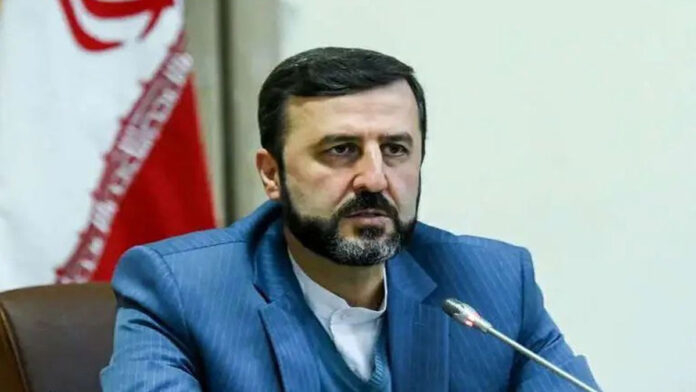
According to Iranian Deputy Foreign Minister for Legal and International Affairs Kazem Gharibabadi, the agreement would bring an immediate and permanent halt to military activities and establish a framework for broader negotiations between the two countries. Iranian state-linked media reported that a final draft of the peace memorandum is expected to be signed on June 19 in Switzerland.
Naval Blockade and Strait of Hormuz at the Center of the Agreement
One of the most significant elements of the proposed US-Iran Peace Deal is the reported removal of the U.S. naval blockade on Iranian ports and the reopening of the Strait of Hormuz, one of the world’s most critical maritime energy corridors. The reopening of the waterway is expected to restore smoother global oil shipments and ease concerns in international energy markets.
Iranian media reports suggested that the Strait of Hormuz could reopen following the formal signing ceremony. Previous negotiations had linked maritime access, sanctions relief, and security guarantees to broader peace efforts between the two countries.
The Strait of Hormuz serves as a vital route for global energy supplies, and any disruption to shipping traffic through the waterway has historically affected oil prices and international trade. Market analysts have closely monitored developments surrounding the negotiations.
60-Day Negotiation Framework on Nuclear Issues and Sanctions
Iranian officials stated that future negotiations regarding Tehran’s nuclear program and sanctions relief will depend on Washington fulfilling its initial commitments under the agreement. According to reports, a 60-day diplomatic process is expected to follow the signing ceremony, during which both sides will address unresolved issues, including sanctions and nuclear-related matters.
Iran has indicated that verification of U.S. commitments will play a key role before moving forward with the next phase of discussions. The talks are expected to focus on confidence-building measures and implementation mechanisms for the agreement.
Pakistan’s Mediation Efforts Credited for Breakthrough
The latest diplomatic breakthrough follows months of negotiations and mediation efforts led by Pakistan. Pakistani Prime Minister Shehbaz Sharif announced that both countries had agreed to terminate military operations across all fronts and move toward a formal peace arrangement.
Sharif stated that multiple meetings would be held this week to prepare for implementation of the agreement ahead of the planned signing ceremony in Switzerland. The mediation effort has been widely viewed as a significant diplomatic achievement in reducing tensions across the Middle East.
Trump Declares Agreement Complete
U.S. President Donald Trump also signaled optimism regarding the agreement, announcing on social media that the deal with Iran had been completed. Trump further stated that he had approved measures aimed at reopening the Strait of Hormuz and ending restrictions related to the naval blockade.
His announcement came shortly after reports emerged that negotiators had finalized a framework intended to end months of military confrontation and establish a roadmap for broader diplomatic engagement.
Israeli Concerns Over Lebanon Provisions
Despite the apparent progress, questions remain regarding the implementation of some aspects of the agreement. Israeli media reports cited officials who suggested that Israel does not consider itself bound by provisions relating to Lebanon that may be included in the U.S.-Iran arrangement.
According to those reports, discussions between Israeli Prime Minister Benjamin Netanyahu and President Trump highlighted differing interpretations of certain regional security commitments. While the broader agreement aims to reduce tensions, regional stakeholders continue to assess its implications.
Global Markets Respond Positively
News of the developing US-Iran Peace Deal has already generated positive reactions across global financial markets. Reports indicate that oil prices declined as investors anticipated a reopening of the Strait of Hormuz and a reduction in geopolitical risks across the region. Global stock markets also posted gains amid expectations of improved energy security and regional stability.
Energy analysts note that the restoration of unrestricted maritime traffic through the Strait could help stabilize global supply chains and reduce volatility in energy markets.
A Potential Turning Point in Middle East Diplomacy
If formally signed on June 19, the agreement could represent one of the most significant diplomatic developments in the Middle East in recent years. While important issues remain unresolved, including long-term arrangements concerning Iran’s nuclear program and sanctions relief, officials from both countries have indicated that the agreement provides a framework for continued dialogue and conflict reduction.
As negotiators prepare for the Switzerland signing ceremony, governments, energy markets, and international observers will be closely watching whether the agreement can be successfully implemented and transformed into a lasting peace framework.
Key Takeaways
- Iran and the United States have agreed in principle to end military operations across multiple fronts.
- A formal peace memorandum is expected to be signed in Switzerland on June 19.
- The agreement includes plans to reopen the Strait of Hormuz and lift the U.S. naval blockade.
- A 60-day negotiation process will address sanctions and nuclear-related issues.
- Israel has reportedly expressed reservations about certain Lebanon-related provisions.
Source: Statements from Iranian officials, Pakistani government announcements, and international media reports.