
Washington, D.C. — March 14, 2026
The United States has announced a significant change to the H-1B visa selection process, introducing a system that considers job salary levels along with the traditional lottery method. The policy shift could affect thousands of foreign professionals seeking employment in the U.S., particularly those working in the technology and specialized professional sectors.
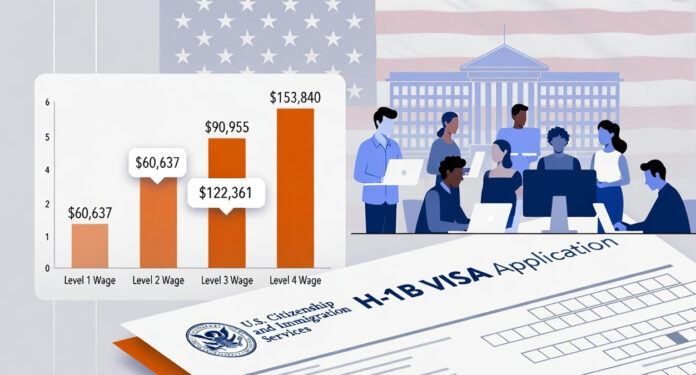
Under the updated approach, applicants will be grouped into four wage levels, and candidates associated with higher-salary positions may receive more opportunities during the selection process.
New Salary-Based Selection System Explained
Under the revised framework, H-1B visa applicants will be categorized into four wage levels based on the offered job salary and experience requirements.
Level 1: Entry-level positions requiring minimal experience
Level 2: Roles requiring moderate professional experience
Level 3: Positions for experienced professionals
Level 4: Highly skilled roles with significant expertise and responsibility
According to the proposed system, applicants in the highest wage category may receive up to four selection opportunities, while those in the entry-level category may receive only one.
Officials say the change is intended to prioritize higher-skilled and higher-paid positions, while reducing reliance on a purely random lottery.
USCIS Releases New Form I-129
The U.S. Citizenship and Immigration Services (USCIS) has also issued an updated version of Form I-129, which companies must use when petitioning for foreign workers.
The new form will take effect on April 1, 2026, and includes expanded requirements for employers to provide detailed job information.
Companies must now clearly specify:
The minimum educational qualifications required for the job
The field of study needed for the position
Whether prior work experience is mandatory
Whether the role includes supervisory responsibilities
Authorities say the goal is to make the process more transparent and structured.
Impact on Companies and Foreign Professionals
Form I-129 is used by employers seeking approval to hire foreign professionals for temporary work in the United States.
With the updated rules, companies will need to ensure that job descriptions, salary details, and supporting documentation remain consistent across all filings.
Experts suggest the change may lead to:
Greater priority for higher-salary and specialized roles
Increased emphasis on skills and expertise
Reduced dependence on the traditional H-1B lottery system
The policy could have significant implications for global professionals seeking U.S. employment opportunities, particularly in fields such as information technology, engineering, and advanced research.