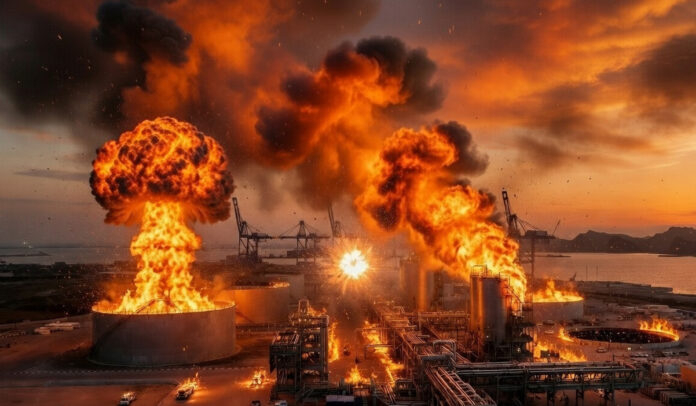
Fujairah, United Arab Emirates — March 14, 2026
Fire Reported at UAE Oil Terminal Amid Rising West Asia Tensions
A fire broke out at a major oil terminal in the United Arab Emirates (UAE) on Saturday amid escalating tensions in West Asia. The incident occurred hours after the United States carried out airstrikes on Iranian facilities on Kharg Island, prompting reports that Iran targeted energy infrastructure in response.
Thick black smoke was seen rising from the direction of Fujairah, a key coastal city that serves as a major port and oil export hub in the region.
Drone Debris Reportedly Caused the Fire
Local authorities said the fire was triggered by falling debris after air defense forces successfully intercepted an incoming drone.
According to an official statement released online, fragments from the destroyed drone fell to the ground and ignited a fire. Officials did not immediately disclose the exact location of the incident within the port area.
UAE Air Defenses Engaged Against Missiles and Drones
The UAE Ministry of Defense confirmed that its air defense systems were actively responding to threats involving ballistic missiles, cruise missiles, and drones.
Authorities said defensive operations were ongoing to protect critical infrastructure and ensure the safety of maritime and energy facilities.
Strategic Importance of Fujairah Port
Fujairah is one of the largest oil shipping and storage hubs in the Gulf region, playing a significant role in global energy trade.
The port serves as an important export terminal for crude oil and petroleum products, making it a strategically vital location for international energy markets.
Strait of Hormuz Disruption Raises Global Concerns
The ongoing conflict has also affected maritime traffic through the Strait of Hormuz, one of the world’s most important shipping routes.
Before the conflict escalated, approximately 20 percent of the world’s oil and liquefied natural gas shipments passed through this narrow waterway.
Recent reports suggest that ship movements in the area have slowed significantly after Iran restricted maritime activity in the strait, increasing pressure on global energy supply chains.
Global Energy Markets on Alert
Energy analysts warn that any prolonged disruption to shipping through the Strait of Hormuz could have serious consequences for global oil markets.
With tensions continuing to rise, governments and energy companies around the world are closely monitoring developments in the region.