Mumbai, India — March 2, 2026
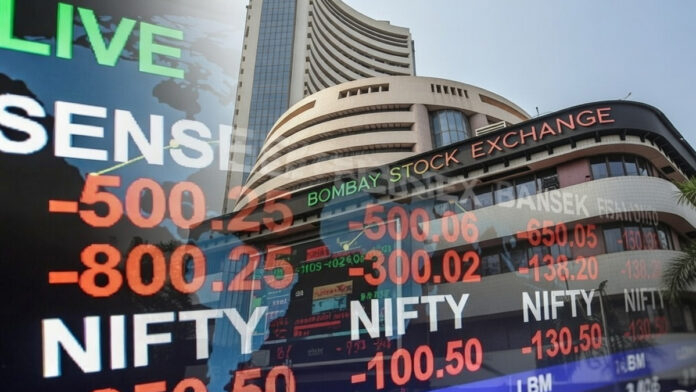
Escalating tensions in West Asia weighed heavily on Indian equity markets on Monday, triggering sharp losses in benchmark indices.
The 30-share BSE Sensex fell 1,072.86 points, or 1.32%, to 80,214.33 in early trade. Meanwhile, the 50-share Nifty 50 declined 333.90 points, or 1.33%, slipping below the key 24,900 level to trade at 24,844.
Sharp Drop in Pre-Opening Session
During pre-trading hours, market sentiment was even weaker. The Sensex had plunged as much as 3,234.47 points to 78,052.72, while the Nifty dropped 519 points to 24,659.25, reflecting heightened investor anxiety.
Rupee Weakens Against the Dollar
Currency markets also reflected the risk-off mood. The Indian rupee depreciated by 24 paise to trade at 91.32 against the U.S. dollar in early trade.
Investors appeared to shift toward safer assets amid concerns over geopolitical instability and its potential impact on global crude oil prices and inflation.
What’s Driving the Market Fall?
The selloff follows rising geopolitical tensions in West Asia, which have raised concerns about:
Potential disruptions in oil supply routes
Higher crude prices
Inflationary pressures
Foreign investor outflows
India, being a major oil importer, remains sensitive to global crude price movements. Any sustained spike in energy prices could widen the current account deficit and impact corporate margins.
Market Outlook
Analysts suggest that volatility may remain elevated in the near term as investors monitor geopolitical developments and global commodity prices.
Market participants are closely watching crude oil trends, currency movements, and foreign institutional investor (FII) flows for further direction.