Mumbai, India — March 23, 2026
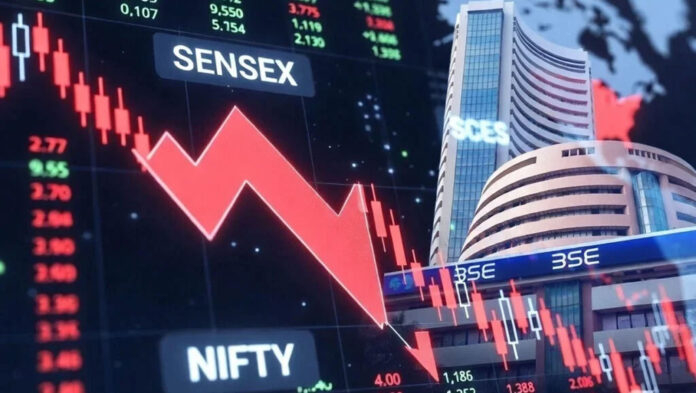
India’s equity markets witnessed a sharp sell-off on Monday, with the Sensex plunging over 1,800 points and erasing nearly ₹11 lakh crore in investor wealth during early trade amid escalating global tensions.
The BSE Sensex and Nifty50 declined sharply as geopolitical risks intensified following rising tensions between the United States and Iran, particularly around the strategic Strait of Hormuz.
The sell-off was triggered by fears of disruption in global oil supply, with Brent crude holding near $112 per barrel, raising concerns over inflation and higher import costs for India.
Adding to the pressure, the Indian Rupee weakened to a record low of 93.95 against the US dollar, reflecting strong demand for safe-haven assets and capital outflows from emerging markets.
Global cues remained weak, with major Asian indices trading deep in the red. South Korea’s Kospi dropped sharply, while Japan’s Nikkei also recorded significant losses, further dampening investor sentiment.
Market participants also pointed to potential foreign institutional investor (FII) outflows as a contributing factor behind the sharp decline on Dalal Street.
The Reserve Bank of India is closely monitoring the situation as volatility increases across currency, equity, and commodity markets.
Key Factors Behind the Crash
- Escalating US-Iran geopolitical tensions
- Surge in crude oil prices and inflation fears
- Rupee hitting record low against the US dollar
- Weak global cues and Asian market sell-off
- Possible foreign investor outflows
Impact on India
The sharp decline has raised concerns about India’s economic outlook, particularly due to its heavy dependence on oil imports. Higher crude prices could increase inflationary pressure and widen the trade deficit.
Currency volatility and equity market losses may also impact investor confidence and capital inflows in the near term.
Market Outlook
Analysts suggest that markets may remain volatile in the short term, with recovery largely dependent on easing geopolitical tensions and stabilization in global energy prices.
Emerging markets like India remain particularly vulnerable to such external shocks, especially during periods of global uncertainty.