New Delhi, India — April 13, 2026
The PM Narendra Modi on Monday said that opposition parties had strongly advocated for implementing the Women’s Reservation Law by 2029, highlighting broad political consensus around the landmark legislation.
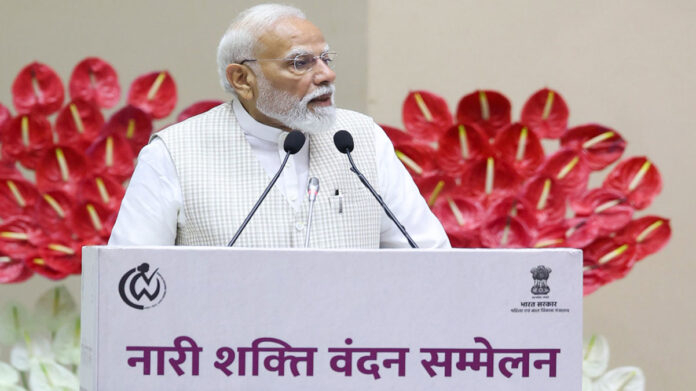
Speaking at the Nari Shakti Vandan Conference held at Vigyan Bhavan in New Delhi, the Prime Minister described the Nari Shakti Vandan Act, 2023 as a transformative step toward strengthening women’s participation in India’s democratic framework.
Consensus Across Political Spectrum
He noted that opposition leaders had particularly stressed the importance of ensuring the law is implemented before 2029, underscoring urgency around translating legislation into action.
A Landmark Step for Women’s Empowerment
The Prime Minister described the Act as one of the most significant reforms of the 21st century, addressing a long-standing demand for greater representation of women in legislative bodies.
The law aims to reserve one-third of seats in the Lok Sabha and state assemblies for women, a move expected to reshape India’s political landscape over time.
“I Have Come to Seek Blessings”: PM Modi
During his address, Modi struck a personal tone, stating that he had come to the event not to deliver a lecture but to seek the blessings of the country’s women.
He highlighted the role of women in nation-building, saying that India’s “Nari Shakti” has made invaluable contributions to the country’s development across sectors.
From Policy to Practice
The Prime Minister stressed that the passage of the Act represents more than symbolic progress, adding that it reflects a commitment to building an inclusive and equitable society.
He noted that:
- Women’s representation in governance enhances sensitivity in policymaking
- Greater participation leads to improved accountability in systems
- The law aims to make social justice a lived reality, not just a slogan
Local Governance as a Model
Modi also pointed to India’s Panchayati Raj institutions as a successful example of women’s leadership at the grassroots level, suggesting that similar representation at higher levels could further strengthen democratic processes.