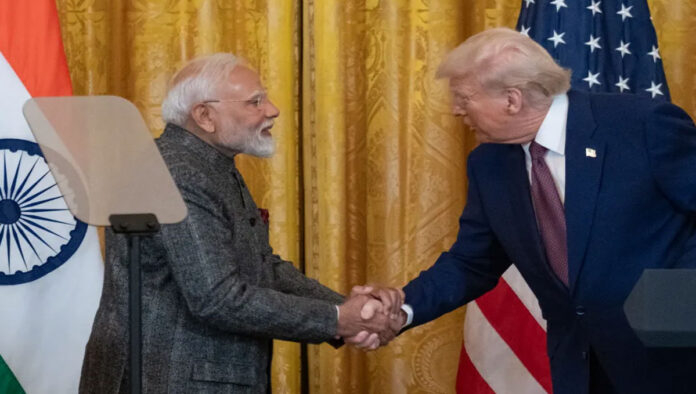
PM Modi-Trump Meeting at G7 Summit Draws Global Attention Amid Evolving India-US Relations
Paris, France, June 16, 2026: The upcoming PM Modi-Trump Meeting on the sidelines of the G7 Summit is expected to be one of the most closely watched diplomatic engagements of the year. Prime Minister Narendra Modi and U.S. President Donald Trump are scheduled to meet on June 17, marking their first face-to-face interaction in approximately 16 months since their last bilateral talks in Washington in February 2025.
The meeting comes at a time when India-US relations have undergone significant changes, shaped by trade disputes, geopolitical developments, strategic realignments, energy security concerns, and evolving global power dynamics.
Diplomatic observers believe the discussions could play a crucial role in determining the future trajectory of one of the world’s most important strategic partnerships.
What Happened During the Last Modi-Trump Meeting?
The previous meeting between Prime Minister Modi and President Trump took place at the White House in February 2025 and was widely viewed as a strong beginning to India-US engagement during Trump’s second presidential term.
Several key initiatives emerged from that meeting.
Launch of the COMPACT Initiative
One of the most significant announcements was the launch of the US-India COMPACT Initiative (Catalyzing Opportunities for Military Partnership, Accelerated Commerce & Technology).
The framework was designed to:
- Strengthen defense cooperation
- Expand military manufacturing partnerships
- Increase collaboration in artificial intelligence
- Promote scientific and technological innovation
- Enhance strategic economic engagement
At the time, both governments described the initiative as a roadmap for deepening long-term bilateral cooperation.
Trade and Economic Cooperation
Trade emerged as a major focus during the 2025 meeting.
President Trump emphasized reducing America’s trade deficit with India, estimated at approximately $46 billion, while encouraging lower tariffs on U.S. exports.
Both leaders discussed the framework for a new bilateral trade agreement. However, negotiations later became complicated due to tariff disputes and broader economic disagreements.
Energy and Nuclear Cooperation
The two countries also pledged to expand cooperation in:
- Oil and gas trade
- Energy security
- Civil nuclear technology
- Advanced nuclear reactor development
Among the notable proposals was collaboration on U.S.-designed modular nuclear reactors for India.
Defense and Strategic Coordination
The leaders reaffirmed their commitment to cooperation in:
- Defense partnerships
- Investment promotion
- Multilateral diplomacy
- Strategic coordination
- People-to-people ties
At the time, expectations were high that India-US relations would enter a new phase of strategic alignment.
How India-US Relations Changed Over the Past 16 Months
While the February 2025 meeting generated optimism, subsequent developments introduced several challenges into the relationship.
1. Trade Disputes and Tariff Tensions
Trade has become one of the most contentious issues between the two countries.
The Trump administration imposed tariffs on more than 70 countries, including India, as part of its broader trade policy agenda.
Additional duties were reportedly imposed due to India’s continued purchases of Russian crude oil, creating friction between Washington and New Delhi.
Although legal challenges affected some of these measures, negotiations over a comprehensive trade agreement have yet to produce a final breakthrough.
As a result, trade remains one of the key issues expected to dominate the upcoming talks.
2. US Engagement With Pakistan Raises Concerns
Another source of concern for India has been Washington’s renewed diplomatic engagement with Pakistan.
New Delhi has closely monitored developments including:
- Renewed diplomatic outreach by Washington
- US-Pakistan strategic discussions
- Security-related consultations
- High-level meetings involving Pakistani leadership
Indian policymakers have expressed concerns that growing US engagement with Pakistan could complicate regional strategic calculations.
The issue is likely to remain an important backdrop during the Modi-Trump discussions.
3. Quad and Indo-Pacific Strategy Questions
The Quad partnership involving India, the United States, Australia, and Japan remains central to regional security cooperation.
However, some analysts argue that trade pressures and shifting diplomatic priorities have created uncertainty regarding long-term Indo-Pacific strategy.
Despite these concerns, recent engagements between senior Indian and American officials have reaffirmed support for Quad cooperation and regional stability initiatives.
Maintaining momentum within the Quad framework is expected to feature prominently during the meeting.
4. Efforts to Rebuild Momentum
Despite periodic tensions, both countries have continued efforts to strengthen strategic engagement.
In May 2026, U.S. Secretary of State Marco Rubio visited India, where discussions focused on:
- Critical minerals cooperation
- Supply chain resilience
- Advanced technologies
- Economic security
- Strategic investments
The visit was viewed as part of broader efforts to stabilize and expand bilateral cooperation.
Impact of the Iran Conflict and Energy Security
The recent conflict involving Iran and its impact on global energy markets has also affected India-US relations.
India, one of the world’s largest energy consumers, closely monitored developments surrounding shipping routes, crude oil supplies, and energy prices.
The disruption in maritime trade routes highlighted the importance of energy security and regional stability for both nations.
Analysts expect energy cooperation and supply chain resilience to be important topics during the G7 discussions.
Modi and Trump Maintain Personal Rapport
Despite policy disagreements and diplomatic challenges, the personal relationship between Prime Minister Modi and President Trump has largely remained stable.
Their strong rapport, developed during Trump’s first term, has continued to serve as a stabilizing factor in bilateral ties.
According to diplomatic sources, the two leaders have maintained regular communication through multiple phone conversations since 2025.
These interactions reportedly covered:
- Trade negotiations
- Regional security developments
- Energy market stability
- Global economic challenges
- Strategic cooperation
The continued dialogue has helped prevent broader disagreements from significantly damaging the overall partnership.
Key Issues Expected During the G7 Meeting
The upcoming Modi-Trump Meeting is expected to focus on several major topics:
Trade Agreement Negotiations
Both sides are likely to discuss ways to overcome tariff disputes and advance a long-pending bilateral trade agreement.
Defense Cooperation
Strengthening military collaboration and defense technology partnerships remains a shared priority.
Energy Security
The leaders are expected to review developments in global energy markets and discuss long-term cooperation.
Critical Minerals Partnership
Rare earth minerals and critical supply chains could emerge as important discussion points.
Quad and Indo-Pacific Strategy
Regional security cooperation and Indo-Pacific stability are expected to feature prominently.
Technology and Artificial Intelligence
Collaboration in emerging technologies, AI, semiconductors, and innovation ecosystems may also receive significant attention.
Why This Meeting Matters
The Modi-Trump Meeting comes at a pivotal moment for both countries.
India and the United States continue to share common interests in economic growth, strategic stability, technological innovation, and regional security. At the same time, unresolved differences over trade and geopolitical priorities require careful management.
With global uncertainties ranging from energy security to supply chain disruptions and strategic competition, the outcome of the talks could influence not only bilateral relations but also broader developments across the Indo-Pacific region.
As world leaders gather in France for the G7 Summit, the Modi-Trump meeting is expected to be among the most significant diplomatic engagements, offering both nations an opportunity to reset priorities, address challenges, and strengthen one of the world’s most important strategic partnerships.