New Delhi, India — March 8, 2026
The ongoing conflict in West Asia is now beginning to affect commercial activity in India, with traders in Delhi markets reporting rising prices of electronic goods and declining basmati rice rates due to disruptions in international trade.
According to market traders, supply chains connected to Iran and other Middle Eastern countries have been affected by delays in imports, higher transportation costs, and unstable geopolitical conditions. As shipments slow down, several imported goods are becoming scarce in wholesale and retail markets across the capital.
The disruption is particularly visible in products linked to electronics, cosmetics, and certain food commodities.
Imports From Iran Face Supply Disruptions
A number of industrial and consumer goods imported from Iran and the broader West Asian region are seeing supply challenges.
Among the key items affected are:
Kaolin clay – widely used in ceramics, tiles, paper production, and cosmetic manufacturing. Reduced supply may increase manufacturing costs in several industries.
Raw wool and tannery wool – essential for textile and leather industries, potentially affecting wool yarn and garment production.
Jet black tannery wool – a specialized raw wool variety used in woolen textiles and industrial products.
Industrial crushed rock salt – used in chemical industries, water purification systems, and food processing.
Wool yarn – required for producing sweaters, shawls, and other winter garments.
Iranian wet dates and premium dates varieties – widely consumed and used in sweets and food processing.
Piarom dates – a high-quality Iranian date variety with strong demand in international markets.
Pistachio kernels – commonly used in desserts, ice creams, and snack industries.
Almond kernels – an important ingredient in bakery and health food products.
Traders say reduced availability of these imports could lead to price fluctuations in the coming weeks.
Indian Exports to Iran Also Affected
The trade disruption is not limited to imports. Several Indian products exported to Iran and other Middle Eastern countries are also facing challenges.
Major export items include:
Indian Basmati 1121 Sella Rice
Fresh Indian bananas
Turmeric and spices
Deltamethrin insecticide
Copper sulfate
Medical feeding cups used in hospitals
Indian black tea
Glass artware
Animal feed supplements
Sugar and jaggery
Traders say export shipments have slowed due to uncertainty in regional markets and shipping logistics.
Basmati Rice Prices Decline as Middle East Markets Slow
The conflict has particularly impacted basmati rice exports, a major agricultural export from India.
With Middle Eastern markets temporarily slowing or closing due to instability, rice shipments from Delhi’s major trading hub Naya Bazar have been disrupted. As a result, supply has increased in domestic markets, leading to a decline in basmati rice prices, traders said.
Electronics Supply Slows, Prices Increase
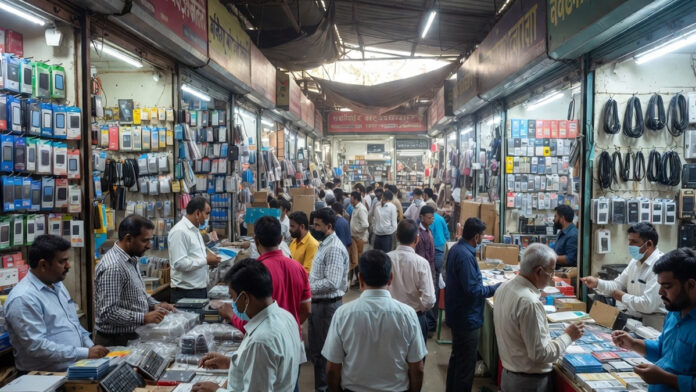
The effects of the conflict are also visible in Delhi’s major electronics markets, where supply of mobile accessories, computer components, and small electronic devices has slowed.
Many electronic parts are imported from global supply chains connected to West Asia. Traders report that shipping delays have significantly extended delivery timelines.
A trader identified as Vinod Kapor said products that earlier arrived within 10 to 12 days are now taking 30 days or more.
With shipments delayed and transportation costs rising, the prices of many electronic items have increased by 10 to 20 percent, affecting both retailers and consumers.
Shortage of Machinery Spare Parts
Industrial sectors are also facing challenges as the conflict disrupts supply of machinery components.
Many small industries in and around Delhi depend on imported spare parts for machinery and equipment.
Ajeet Shrama, a trader in the Okhla Industrial Area, said several critical machine components sourced from abroad are now arriving late due to import disruptions. The delay is affecting production schedules and repair work in small manufacturing units.
Traders Monitor Situation as Supply Chains Adjust
Market experts say the full impact of the West Asian conflict on Indian trade will depend on how long the disruption continues.
If shipping routes and exports remain affected for an extended period, traders warn that consumer goods prices and industrial supply chains could face further pressure in the coming weeks.