GAZA CITY — May 26, 2026
Israel Airstrike in Gaza has intensified concerns over the fragile ceasefire in the region after an Israeli airstrike in southern Gaza reportedly killed a Palestinian woman and a young girl on Monday.
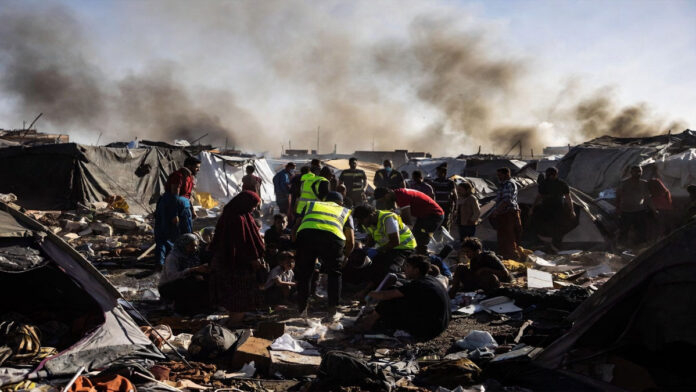
According to hospital officials in Gaza, the strike targeted tents sheltering displaced families in the Muwasi area west of Khan Younis. The attack also injured another child, who was later taken to Kuwait Field Hospital for medical treatment.
The latest incident has added to growing fears that the already fragile ceasefire agreement could further weaken as violence continues across the Gaza Strip despite ongoing diplomatic efforts to reduce hostilities.
Attack Reportedly Hit Displaced Families’ Camp
Local health authorities said the airstrike struck a tent camp housing civilians displaced by months of fighting in Gaza. Witnesses described scenes of panic and chaos as emergency teams rushed to evacuate the wounded from the damaged area.
Medical officials confirmed that a Palestinian woman and a small girl died at the scene, while another child sustained injuries during the blast.
The Israeli military acknowledged carrying out the strike and stated that the operation targeted a militant operative in the area. However, the military did not immediately provide additional operational details or comment on civilian casualties reported by Gaza authorities.
The Muwasi region has become one of the main temporary shelter areas for thousands of displaced Palestinians during the prolonged conflict, with many families living in makeshift tents under increasingly difficult humanitarian conditions.
Violence Continues Despite Ceasefire Agreement
The latest Israel Airstrike in Gaza comes despite a ceasefire arrangement reached in October aimed at reducing hostilities after more than two years of conflict.
Although the scale of large ground battles has decreased since the truce began, Gaza continues to witness frequent airstrikes, shootings, and military operations almost daily.
According to Gaza’s Health Ministry, more than 880 Palestinians have reportedly been killed since the ceasefire agreement came into effect. The ministry says ongoing military operations continue to heavily impact civilians living in densely populated areas.
Humanitarian organizations have repeatedly warned that continued violence is worsening conditions for displaced families already struggling with shortages of food, water, shelter, and medical supplies.
Israel and Hamas Offer Conflicting Narratives
Israeli officials maintain that military operations are being conducted in response to security threats and alleged ceasefire violations by armed groups operating inside Gaza.
The Israeli military says militants continue targeting Israeli forces and attempting attacks despite the ceasefire framework, making defensive and preventive military action necessary.
On the other side, Gaza’s Hamas-run Health Ministry argues that Israeli airstrikes are causing significant civilian casualties, including women and children living in temporary shelters.
The ministry, however, does not separately categorize casualty figures between civilians and militants, making independent verification difficult in many cases.
The conflicting narratives from both sides continue to complicate international diplomatic efforts aimed at stabilizing the region and maintaining the ceasefire.
Humanitarian Crisis Deepens Across Gaza
The humanitarian situation in Gaza remains severe as thousands of families continue to live in overcrowded displacement camps and temporary shelters.
International aid agencies have repeatedly expressed concern over deteriorating living conditions, warning that continued military escalation could further strain medical infrastructure and humanitarian relief operations.
Many displaced residents have already moved multiple times since the conflict began, with temporary camps often lacking reliable electricity, sanitation, and healthcare access.
Experts say repeated attacks near civilian shelter zones are increasing fears among displaced populations who have few safe places left to relocate.
Global humanitarian organizations have urged all parties involved to protect civilians and uphold international humanitarian law while continuing diplomatic negotiations to preserve the ceasefire.
International Concern Grows Over Fragile Ceasefire
The latest Israel Airstrike in Gaza has drawn renewed international attention as world leaders and humanitarian groups monitor the stability of the ceasefire agreement.
Diplomatic observers warn that continued military incidents could undermine ongoing mediation efforts aimed at preventing a broader escalation in the region.
Several countries and international organizations have called for restraint and renewed dialogue to avoid further civilian casualties and humanitarian suffering.
Analysts believe the situation remains highly volatile, particularly as tensions across the wider Middle East continue to influence developments inside Gaza.
If the ceasefire collapses completely, experts warn that the region could witness another major escalation with serious humanitarian and geopolitical consequences.