Tehran — March 14, 2026
Amid rising tensions in West Asia, Iran is reportedly considering a new condition for oil tankers passing through the Strait of Hormuz, one of the world’s most important energy shipping routes.
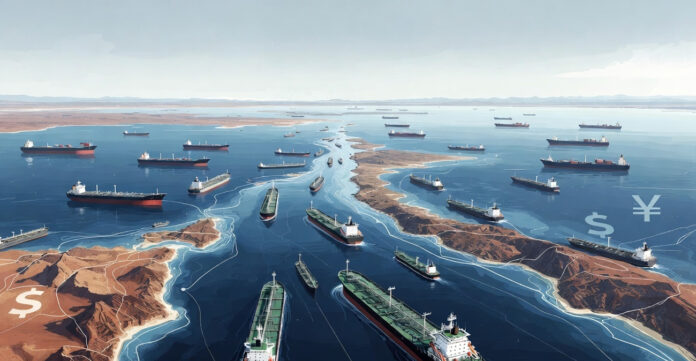
According to reports, Tehran may allow a limited number of oil tankers to transit the strategic waterway if the oil trade is conducted in China’s currency, the yuan. The proposal is said to be part of a broader plan to regulate maritime movement in the region following heightened conflict involving the United States and Israel.
However, the claim has not been independently confirmed by Iranian authorities or international maritime organizations.
Strategic Importance of the Strait of Hormuz
The Strait of Hormuz is a narrow waterway connecting the Persian Gulf to the Gulf of Oman, and it plays a crucial role in global energy supply.
A significant portion of the world’s crude oil shipments passes through this route every day. Any disruption or new restrictions on tanker movement in the strait could have major implications for global oil markets and shipping operations.
Potential Shift Away from Dollar-Based Oil Trade
Globally, most oil transactions are traditionally conducted in U.S. dollars. However, geopolitical developments and sanctions in recent years have encouraged some countries to explore alternative currencies for energy trade.
For example, some Russian oil exports have been traded in rubles and Chinese yuan after Western sanctions limited the use of dollar-based transactions.
If Iran introduces such a policy, it could signal a further shift toward non-dollar oil trading in certain geopolitical circumstances.
Regional Tensions and Maritime Security
The reported proposal comes at a time when tensions in the Middle East remain high, with concerns over the security of shipping routes and energy infrastructure.
Analysts say any new restrictions or conditions on tanker movement in the Strait of Hormuz could affect global energy supply chains and international trade routes, though officials have not yet confirmed whether such measures will be formally implemented.