
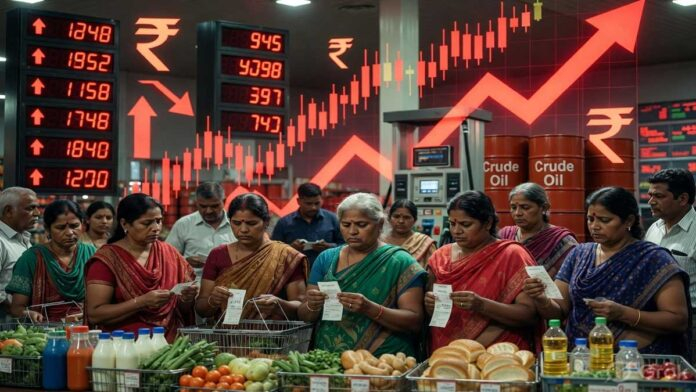
New Delhi, India — May 18, 2026
India could be heading toward a fresh inflationary crisis as wholesale inflation is projected to rise beyond 10% in the coming months amid soaring global crude oil prices and mounting pressure on fuel costs, according to a new research report by Systematix.
The report warned that the recent ₹3 per liter increase in petrol and diesel prices may only be the beginning, with oil marketing companies likely to implement further price hikes to offset mounting losses caused by elevated crude oil prices.
India’s Wholesale Price Index (WPI) inflation has already climbed to a 42-month high of 8.3% in April 2026, signaling intensifying cost pressures across the economy. Inflation in the fuel and power segment has surged sharply to 24.71%, raising concerns over broader price stability and economic growth.
Crude Oil Above $100 Raises Fresh Economic Risks
According to the report, global crude oil prices are expected to remain above $100 per barrel for an extended period, significantly increasing India’s import burden and energy costs.
Oil marketing companies are estimated to have suffered losses of nearly ₹1.7 lakh crore to ₹1.8 lakh crore over the past three months due to elevated crude prices and delayed retail price adjustments.
Analysts said the recent fuel price hike would recover only around 7% to 8% of these losses, making additional increases in petrol and diesel prices highly likely in the near future.
The report cautioned that sustained energy inflation could trigger a chain reaction across sectors including transportation, manufacturing, agriculture, and household consumption.
Retail Inflation Expected to Climb Further
The sharp rise in wholesale inflation is also expected to push retail inflation higher in the coming quarters.
India’s Finance Ministry has reportedly revised its consumer price inflation (CPI) projection for FY2026-27 upward to between 5.5% and 6%, significantly above the Reserve Bank of India’s earlier estimate of 4.6%.
Systematix warned that retail inflation could accelerate further to between 6% and 7% during the second half of the fiscal year if crude oil prices remain elevated and supply-side pressures intensify.
Economists believe higher food, fuel, and transportation costs could place additional strain on household budgets, reducing consumer spending power and weakening overall economic demand.
GDP Growth and Rupee Under Pressure
The report also flagged growing concerns over India’s economic growth outlook.
Rising inflation is expected to reduce consumer demand and corporate profitability, potentially dragging GDP growth below the Reserve Bank of India’s projected 6.9% expansion rate.
Meanwhile, the Indian rupee could face further depreciation pressure and may weaken beyond the psychologically important 100-per-dollar mark if global commodity prices continue to rise and capital outflows increase.
Analysts warned that a widening balance of payments deficit could force the Reserve Bank of India to consider additional interest rate hikes to stabilize inflation and support the currency.
Higher borrowing costs, however, may create further pressure on businesses and consumers already grappling with rising living expenses.
Agriculture, Industry, and Banking Sector Face Uneven Impact
The inflationary shock is expected to affect different sectors of the economy in varying ways.
The agriculture sector faces rising fertilizer and input costs, along with concerns surrounding an uneven monsoon season. Rural inflation is also increasing faster than urban inflation, raising fears of broader financial stress in rural households.
Industrial companies are expected to face higher energy and logistics expenses, which may compress profit margins and reduce investment activity.
In the banking sector, loan demand is rising, but analysts noted that much of the increased borrowing is being driven by corporate liquidity needs rather than genuine business expansion.
Market experts believe the coming months will be critical for policymakers as India balances inflation control, economic growth, and currency stability amid a volatile global energy environment.