Budapest, Hungary — April 13, 2026
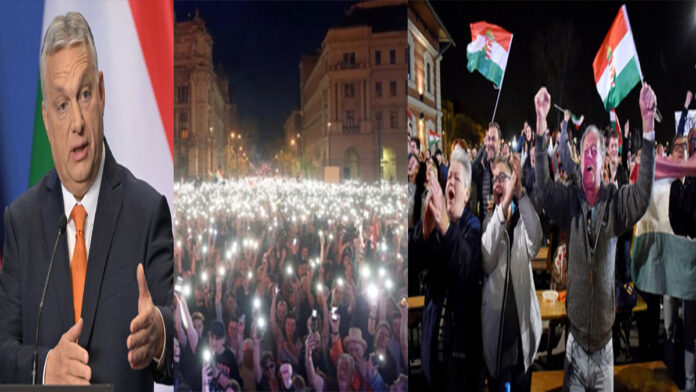
Hungary has witnessed a dramatic political upheaval as Prime Minister Viktor Orbán conceded defeat, ending his 16-year dominance over the country’s political landscape.
Opposition leader Péter Magyar delivered a historic victory, leading the Tisza Party to what projections indicate is a constitutional supermajority, reshaping Hungary’s future and sending shockwaves across Europe.
📊 Landslide Victory Redraws Hungary’s Political Map


The 2026 election recorded a remarkable 79.51% voter turnout, the highest in decades, signaling widespread public demand for change.
- Tisza Party vote share: ~53.33%
- Seats projected: 138 out of 199
- Supermajority threshold: 133 seats
Orbán’s Fidesz–KDNP Alliance saw a steep fall, reduced to roughly 55 seats, while Mi Hazánk Movement secured a minor presence.
🗣️ Orbán Concedes, Marks End of an Era


In a measured concession speech, Orbán described the outcome as “painful” but acknowledged the will of the people.
“We will continue to serve the Hungarian nation from the opposition,” he said, confirming a peaceful democratic transition after five consecutive terms since 2010.
🏆 Magyar’s Rise and Reform Agenda


Magyar, a 45-year-old former Fidesz insider turned reformist, built his campaign around anti-corruption, transparency, and European integration.
In his victory speech, he invoked Hungary’s revolutionary past and echoed civic duty ideals inspired by John F. Kennedy, promising a “new republic based on accountability and freedom.”
🌍 Europe-Wide Impact and Strategic Shift
The election result carries significant geopolitical consequences:
- Hungary is expected to realign with the European Union
- Likely removal of vetoes on Ukraine aid
- Reduced alignment with Russia and closer ties to NATO
- A symbolic setback for Moscow’s influence in Europe
The outcome has drawn global attention, including support for Orbán from Donald Trump and JD Vance during the campaign.
⚖️ What Comes Next for Hungary
With a projected supermajority, the Tisza Party now holds the power to:
- Reverse constitutional changes made under Orbán
- Strengthen judicial independence
- Introduce anti-corruption reforms
- Rebuild democratic institutions
Analysts say this marks a decisive pivot away from Hungary’s “illiberal democracy” model toward mainstream European governance.
📊 A Defining Moment for Europe
This election represents more than a national transition—it is a defining political moment for Europe, with ripple effects expected across EU policymaking, Ukraine strategy, and the broader balance between populism and democratic reform.
Final certification of results is pending, but the message from voters is unmistakable: Hungary is entering a new political era.