KINSHASA, Democratic Republic of Congo | July 10, 2026
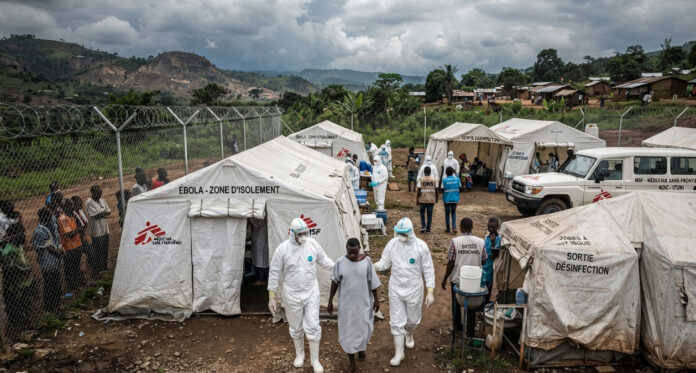
DR Congo Ebola Outbreak continues to intensify, with the virus spreading beyond its original epicenter in Ituri Province and raising concerns about a wider regional health emergency. The United Nations has called for immediate international action to contain the outbreak, warning that ongoing conflict, population displacement, and weak healthcare infrastructure are increasing the risk of further transmission across the Democratic Republic of Congo (DRC) and neighboring countries.
UN Under-Secretary-General for Humanitarian Affairs and Emergency Relief Coordinator Tom Fletcher said the international community must act quickly to stop the virus before it spreads further.
“We need to move rapidly to break the chain of Ebola transmission in the Democratic Republic of Congo,” Fletcher said in a statement on Thursday.
He noted that although Ituri Province remains the center of the outbreak, confirmed cases are now emerging in other provinces where insecurity and constant population movement make containment increasingly difficult.
Nearly 1,800 Confirmed Cases and 625 Deaths
The Ebola outbreak was officially declared on May 15. Since then, the number of infections has continued to rise.
According to the latest update from the DRC Ministry of Communication and Media, the country has reported:
- 1,792 confirmed Ebola cases
- 625 deaths
- 764 patients currently in isolation or receiving treatment
- 295 recovered patients
- Case fatality rate of 34.1%
Health officials say the outbreak remains one of the most serious public health emergencies currently facing Central Africa.
Uganda Also Confirms Ebola Cases
The outbreak is no longer confined to the Democratic Republic of Congo.
Authorities have confirmed 20 Ebola cases in neighboring Uganda, highlighting the need for stronger regional coordination, cross-border surveillance, and rapid response measures to prevent wider transmission.
Health Minister Says Outbreak Remains ‘Very Active’
Speaking in Bunia, the capital of Ituri Province, DRC Health Minister Samuel Roger Kamba described the Ebola outbreak as remaining in a “very active” phase.
Bunia continues to serve as the outbreak’s epicenter, but officials warn that the situation remains unpredictable.
Kamba said it is too early to determine when the outbreak will peak because several factors continue to drive transmission, including:
- High population density
- Constant movement of people
- Ongoing armed conflict
- Challenges in engaging local communities
- Limited access to healthcare services
These conditions make contact tracing, vaccination campaigns, and treatment operations significantly more difficult.
UN Warns Ebola Is More Than a Health Emergency
Tom Fletcher stressed that the Ebola outbreak is occurring in communities already devastated by humanitarian crises.
Millions of people across eastern DRC continue to face:
- Armed conflict
- Food insecurity
- Mass displacement
- Poor infrastructure
- Limited access to healthcare
- Weak public services
He said these overlapping emergencies make the Ebola response far more challenging and increase the vulnerability of affected populations.
United Nations Calls for Safe Humanitarian Access
The UN said it is expanding its Ebola response but emphasized that international support must increase rapidly.
Fletcher urged all parties to ensure safe and uninterrupted access for humanitarian workers, healthcare personnel, medicines, protective equipment, and emergency relief supplies.
He also called on donor nations and international organizations to release pledged funding without delay so frontline responders can continue life-saving operations.
According to Fletcher, keeping borders and humanitarian supply routes open is essential to slowing the spread of the virus and supporting vulnerable communities.
Containment Efforts Face Major Challenges
Health experts say several factors continue to complicate Ebola containment efforts in eastern DRC, including:
- Ongoing violence and insecurity
- Population displacement
- Remote and hard-to-reach communities
- Limited laboratory capacity
- Shortage of healthcare workers
- Community mistrust in some affected areas
Authorities are continuing surveillance, patient isolation, contact tracing, vaccination efforts, and public awareness campaigns to reduce transmission.
Global Health Community Urged to Act Quickly
The United Nations warned that immediate international cooperation remains essential to prevent the outbreak from expanding further across Central Africa.
While Ebola is not currently classified as a global pandemic, health officials caution that sustained transmission across multiple regions increases the risk of broader cross-border spread if containment measures are delayed.
With 1,792 confirmed infections, 625 deaths, and cases now reported beyond Ituri Province, global health agencies are urging governments, humanitarian organizations, and donors to strengthen emergency response efforts before the crisis deepens further.