Hainan, China — March 7, 2026
China has installed its third large-scale underwater data center, a technology project designed to reduce energy consumption by using cool ocean water to naturally regulate server temperatures.
The new facility, located off the coast of Hainan Province, represents one of the most ambitious attempts to develop energy-efficient data infrastructure as global demand for cloud computing and data storage continues to grow.
Technology experts say the project could reshape how data centers are designed in the future by combining advanced engineering with environmentally conscious solutions.
How the Underwater Data Center Works
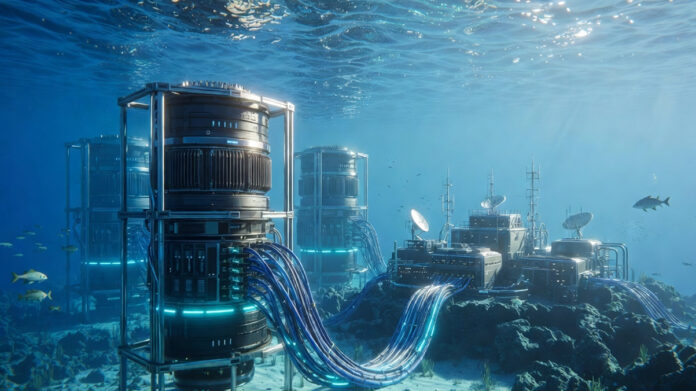
The underwater data center operates through a system of sealed steel pressure vessels that house computer servers.
These cylindrical containers are:
Waterproof and pressure-resistant
Installed 35 to 50 meters below the ocean surface
Anchored securely on the seabed
Inside these modules are high-performance data servers that process and store digital information for cloud services and computing platforms.
Natural Ocean Cooling Saves Energy
Traditional data centers require massive amounts of electricity to power air conditioning systems and cooling fans.
China’s underwater design uses the naturally cold ocean water as a heat exchanger, allowing the surrounding sea to absorb heat generated by the servers.
According to project estimates, this method can reduce cooling energy consumption by 40% to 60%, significantly lowering operational costs and carbon emissions.
Capacity of the New Facility
The newly deployed underwater center is significantly more powerful than earlier installations.
Key features include:
Located near Hainan Province’s coastline
Capable of processing five times more data than previous centers
Equivalent computing capacity of around 60,000 high-end computers
Engineers say the system has been designed to operate for up to 25 years without direct human intervention.
Key Advantages of Underwater Data Centers
Supporters of the technology highlight several major benefits.
Lower Energy Consumption
By using ocean cooling instead of traditional air-conditioning systems, the data center saves large amounts of electricity each year.
Water Conservation
Conventional data centers require millions of gallons of freshwater for cooling, while underwater facilities use seawater naturally, eliminating freshwater demand.
Efficient Use of Space
Building large data centers on land can be expensive due to high real estate costs. Underwater infrastructure provides vast available space without urban land constraints.
Environmental Concerns Raised
Despite its benefits, the project has drawn attention from environmental groups.
Some experts worry that heat released by the data center could slightly raise surrounding water temperatures, potentially affecting marine ecosystems such as coral reefs and fish habitats.
Chinese engineers involved in the project say environmental monitoring shows the impact remains minimal and within safe ecological limits.
Maintenance Challenges
Another concern involves maintenance and repairs. If equipment fails at depth, repairs can be complex and costly compared with traditional land-based facilities.
However, designers say the modules are built with high durability and redundancy systems to minimize the risk of failures.
China’s Future Plans
China plans to expand the underwater data center concept further by building clusters of such facilities along its coastline over the next five years.
The idea has previously been explored by Microsoft through its experimental Project Natick. However, China is among the first countries attempting to deploy the technology on a large commercial scale.
As global data demand continues to rise, underwater computing infrastructure may become an important part of next-generation sustainable cloud technology.