
Beijing, January 20, 2026
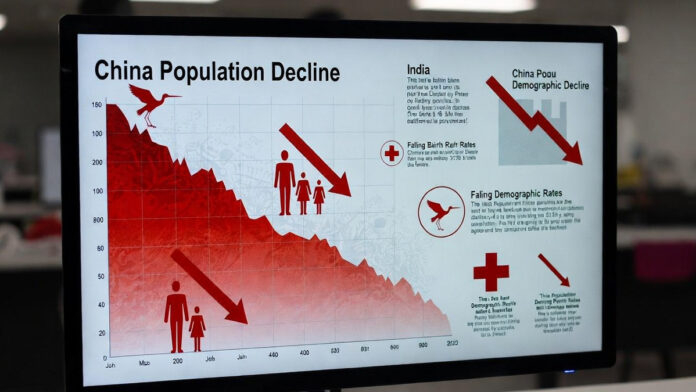
China’s population has declined for the fourth consecutive year as the country recorded a steep 17% drop in birth rate—the sharpest fall in a decade. Once the world’s most populous nation, China has now firmly slipped to second place, with India holding the top position.
According to newly released government data, China’s population in 2025 stood at 1.404 billion, a decrease of 3 million compared to the previous year. The number of newborns dropped to 7.92 million, down by 1.62 million from the previous year, highlighting the continuing collapse in fertility despite several government incentives.
After One-Child Policy, China Faces a New Crisis: How to Convince Couples to Have More Children
Although China ended its decades-long one-child policy in 2015, first allowing two children and later three in 2021, government attempts to boost the birth rate have had minimal impact. Cash subsidies, maternity incentives, and housing support have failed to reverse the demographic decline.
Experts say the challenge is no longer policy restrictions but social and economic realities.
High Cost of Raising Children a Major Barrier
Many families cite financial pressure as the biggest deterrent, especially in a highly competitive society where education, housing, childcare, and healthcare costs remain overwhelming. With China’s economy slowing and household budgets stretched, raising children is increasingly seen as unaffordable.
Like several Asian nations, China is battling a rapidly falling fertility rate. Some estimates suggest the country’s fertility rate has dropped close to 1.0, far below the replacement level of 2.1 needed to maintain population stability.
India Surpassed China in 2023
China remained the world’s most populous nation until 2023, when India surpassed it for the first time. Since then, China’s demographic slide has continued, raising concerns about a shrinking workforce, slowing economic growth, and long-term social challenges.
Demographers warn that the next decade could see even faster population decline unless structural reforms reduce the economic burden on young families.