TEHRAN, IRAN — June 8, 2026
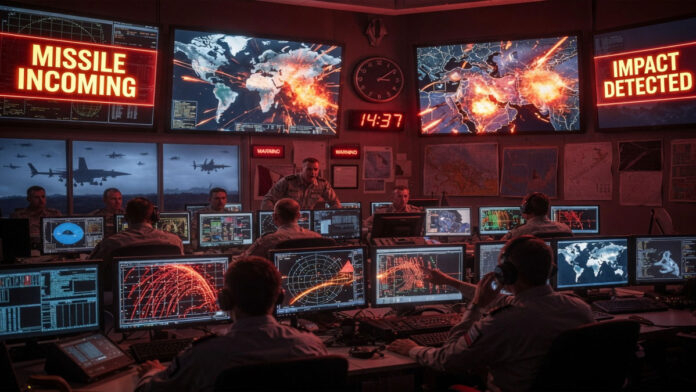
Operation Nasr was launched by Iran’s Islamic Revolutionary Guard Corps (IRGC), according to official statements released Monday, as the confrontation between Iran and Israel entered another volatile phase marked by renewed military exchanges and heightened regional tensions.
The IRGC announced that its aerospace forces carried out retaliatory operations targeting the Nevatim and Tel Nof airbases, two key Israeli military facilities. The claims were made through statements carried by Iran’s semi-official Fars News Agency.
According to the IRGC, the operation was launched in response to what it described as Israeli military actions targeting multiple radar installations located in different parts of Iran.
IRGC Details Operation Nasr
In its statement, the IRGC said its aerospace personnel initiated Operation Nasr, which translates to “Operation Victory,” as a direct response to recent developments in the conflict.
The organization alleged that Israeli forces had conducted missile strikes against several radar sites within Iranian territory. Iranian officials described the operation as a retaliatory measure intended to respond to those attacks.
The statement further asserted that the strikes came after what Iranian authorities characterized as violations of a ceasefire arrangement, although details regarding the alleged violations were not independently verified.
Missile Exchanges Intensify
The latest escalation follows reports that Iranian armed forces launched a barrage of missiles toward Israeli-controlled areas on Sunday night.
Israeli media outlets reported that warning sirens sounded across multiple locations, including the occupied Golan Heights, Tiberias, Safed, Nazareth, Haifa, and several other areas.
The developments have added to concerns that the conflict could broaden further, drawing additional actors into an already unstable regional security environment.
Rising Tensions Across the Region
The military exchanges come amid continued hostilities and a series of retaliatory actions involving multiple fronts across the Middle East.
Iranian sources linked the latest developments to Israel’s ongoing military operations in Lebanon, including strikes in Beirut’s southern suburbs. Iranian officials also referenced allegations regarding the use of prohibited munitions during recent military operations, claims that remain part of broader competing narratives surrounding the conflict.
The rapidly evolving situation has fueled fears of a deeper regional confrontation, with international observers closely monitoring military activity across several neighboring countries.
IRGC Signals Readiness for Further Operations
According to the statement carried by Fars News Agency, identifying additional strategic targets and maintaining a rapid-response capability formed an important component of the current operational phase.
The IRGC further stated that its combat and operational units remain on high alert and are prepared to undertake broader military actions if required.
Officials indicated that contingency plans have been developed to address potential future scenarios, while emphasizing the organization’s readiness to respond to developments on multiple fronts.
Regional Security Concerns Grow
The latest exchange underscores the fragile security situation across the Middle East, where recurring military actions and retaliatory strikes continue to raise concerns among governments and international organizations.
Analysts note that any further escalation could have implications extending beyond Iran and Israel, affecting regional stability, global energy markets, and international trade routes.
As conflicting claims continue to emerge from both sides, independent verification of battlefield developments remains challenging, while diplomatic efforts to reduce tensions face mounting pressure.
What Happens Next?
With missile exchanges continuing and military rhetoric intensifying, attention is increasingly focused on whether diplomatic channels can prevent a broader regional conflict.
For now, both Iran and Israel appear to be maintaining a heightened state of military readiness, while international stakeholders continue urging restraint and de-escalation.