Mumbai, India — May 27, 2026
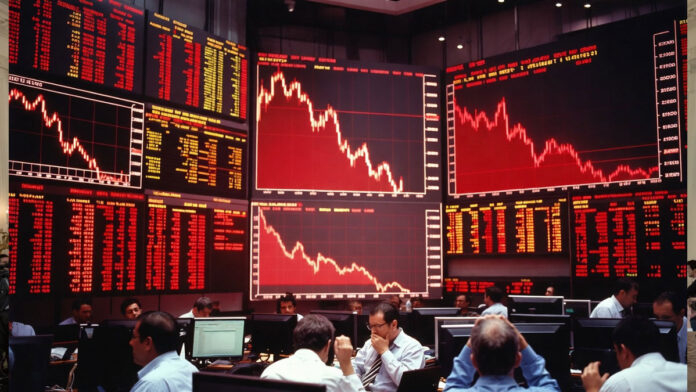
Sensex Closing Bell updates showed Indian equity markets ending Wednesday’s volatile trading session in negative territory as weak global cues and selling pressure in heavyweight banking stocks dragged benchmark indices lower.
The BSE Sensex declined by 141.90 points, or 0.18 percent, to settle at 75,867.80, while the NSE Nifty 50 slipped 6.55 points, or 0.03 percent, to close at 23,907.15.
Throughout the session, markets witnessed sharp swings between buying and selling activity, but late-session weakness in large-cap stocks eventually pushed the indices into the red.
Meanwhile, the Indian rupee remained largely stable against the US dollar, ending marginally stronger by 1 paisa at 95.69 (provisional).
HDFC Bank Emerges as Top Loser on Sensex
The biggest drag on the market during Wednesday’s session came from HDFC Bank, which emerged as the top loser among Sensex constituents.
Investor sentiment weakened significantly after reports surfaced regarding an internal investigation linked to an interest payment matter involving approximately ₹45 crore.
The development triggered concerns among market participants, leading to heavy selling in the banking giant’s shares. HDFC Bank stock reportedly declined by nearly 3 percent, exerting significant pressure on the broader banking sector and benchmark indices.
Market analysts noted that the decline in one of India’s largest private lenders played a crucial role in pulling the Sensex lower despite resilience in other sectors.
Volatile Trading Session Reflects Global Market Uncertainty
Indian markets traded in a highly volatile range throughout the day as investors balanced domestic fundamentals against weak international cues.
Global uncertainty surrounding interest rates, currency movement, and geopolitical developments continued to influence investor sentiment.
Traders observed:
- Sharp intraday fluctuations
- Profit booking in heavyweight stocks
- Selective buying in broader market segments
- Defensive positioning by institutional investors
Despite the pressure on benchmark indices, analysts said the absence of panic selling suggested underlying market resilience.
Broader Market Shows Strength Despite Benchmark Weakness
Although frontline indices closed in negative territory, the broader market delivered a comparatively stronger performance.
Mid-cap and small-cap stocks managed to outperform the benchmark indices, reflecting sustained investor interest beyond large-cap counters.
The broader market ended the session in positive territory even as blue-chip stocks remained under pressure.
Market experts believe this trend indicates:
- Strong domestic liquidity
- Continued retail investor participation
- Confidence in India’s long-term growth story
- Sector-specific buying opportunities
The ability of the broader market to remain stable during a weak global environment is being viewed as a positive signal for overall market sentiment.
India VIX Declines, Signaling Lower Panic in Markets
One of the key indicators closely watched by traders during volatile sessions is the India VIX, often referred to as the market’s fear gauge.
On Wednesday, the India VIX declined nearly 6 percent to close at 15.24.
The fall in the volatility index indicates that investors are not expecting extreme turbulence in the near term despite global uncertainty and weakness in benchmark indices.
A lower VIX generally reflects:
- Reduced market panic
- Stable investor expectations
- Controlled volatility levels
- Improved confidence among traders
Analysts said the decline in India VIX suggests that market participants currently view the ongoing weakness as manageable rather than systemic.
Rupee Holds Steady Against US Dollar
The Indian rupee remained relatively stable during the trading session and closed marginally higher against the US dollar.
Currency traders said foreign fund flows, central bank monitoring, and crude oil price movements continued to influence rupee trading.
Despite global currency volatility, the rupee’s ability to remain stable helped limit deeper losses in domestic equities.
However, experts warned that continued pressure on emerging market currencies and rising global uncertainty could create short-term volatility in Indian financial markets.
Large-Cap Stocks Under Pressure
Large-cap stocks, particularly banking and financial sector companies, remained under pressure during the session.
Several institutional investors preferred cautious positioning ahead of upcoming global economic data releases and international market developments.
Key concerns impacting sentiment included:
- Weak global market trends
- Foreign investor activity
- Currency fluctuations
- Interest rate expectations
- Geopolitical tensions
The banking sector, which carries significant weight in benchmark indices, played a major role in shaping Wednesday’s market direction.
Market Outlook: Investors Watching Global Cues Closely
Market participants are expected to remain cautious in the near term as global uncertainties continue to influence investor sentiment.
Analysts believe benchmark indices may continue to witness volatility until:
- Global geopolitical tensions ease
- Currency markets stabilize
- Institutional buying strengthens
- International economic outlook improves
However, the resilience shown by the broader market suggests that domestic fundamentals remain relatively strong despite external pressures.
Many experts believe India’s long-term growth outlook, corporate earnings strength, and domestic liquidity support could help cushion markets from deeper corrections.
Key Market Closing Data
| Index | Closing Level | Change |
|---|---|---|
| BSE Sensex | 75,867.80 | -141.90 (-0.18%) |
| NSE Nifty 50 | 23,907.15 | -6.55 (-0.03%) |
| India VIX | 15.24 | -6% |
| Indian Rupee | 95.69/USD | +0.01 |