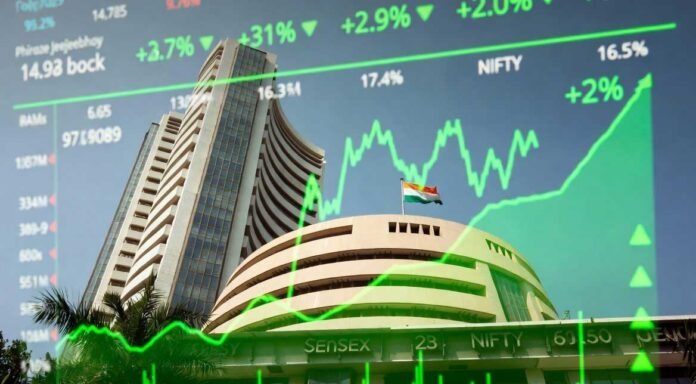
Mumbai, India — May 22, 2026
Indian benchmark equity indices opened higher on Friday, supported by gains in banking and heavyweight stocks, even as investors remained cautious due to persistent foreign fund outflows and ongoing global geopolitical tensions.
The BSE Sensex advanced 315 points during early trade to touch 75,507.09, while the NSE Nifty rose above the crucial 23,700 mark, gaining 84 points to reach 23,747.40.
Market participants tracked mixed global signals as investors weighed inflationary risks, concerns over energy supply disruptions, and the impact of prolonged geopolitical uncertainty in the Middle East. Analysts said improved sentiment in Asian markets offered temporary relief after Japan’s core inflation data came in softer than expected.
Despite the positive opening, market experts urged caution ahead of the monthly derivatives expiry next week, which is expected to keep volatility elevated on Dalal Street.
Banking and market expert Ratnam Chandra said foreign portfolio investors (FPIs) remained net sellers for most of May, limiting broader market momentum despite strong domestic participation.
He added that traders should remain alert to possible profit-booking activity toward the weekend and before the month-end expiry cycle.
“Global markets continue to operate in a fragile environment where artificial intelligence-driven momentum is supporting major indices, even as geopolitical and inflation concerns persist,” Chandra said.
The ongoing Iran conflict, which has stretched for nearly three months, continues to impact global energy markets and inflation expectations, adding pressure to investor sentiment worldwide.
Meanwhile, Asian equities showed moderate recovery after Japan reported lower-than-anticipated core inflation figures, easing fears of aggressive monetary tightening in the region.
Investors are now closely watching institutional investment flows, crude oil prices, and global central bank signals for further direction in domestic equities.