Zurich, Switzerland — May 13, 2026
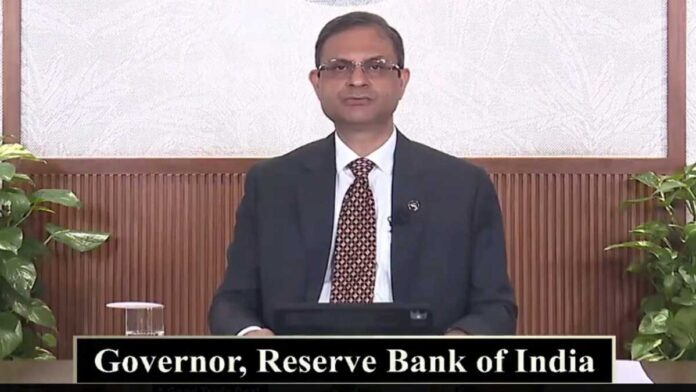
Rising geopolitical tensions in West Asia are beginning to visibly impact the Indian economy, with Reserve Bank of India (RBI) Governor Sanjay Malhotra warning that Indian consumers may eventually face higher fuel prices if the ongoing global disruptions continue for an extended period.
Speaking at the 12th High-Level Conference jointly organized by the International Monetary Fund (IMF) and the Swiss National Bank in Zurich, the RBI Governor stated that the Indian government has so far absorbed the burden of surging global crude oil prices. However, he cautioned that maintaining the current price stability indefinitely may not be sustainable.
Malhotra’s remarks come at a time when global energy markets remain highly volatile due to escalating tensions in West Asia, a region that plays a critical role in India’s energy security and trade network.
Government Has Shielded Consumers So Far
Despite a sharp rise in international crude oil prices over recent weeks, the Indian government has largely kept domestic petrol and diesel prices stable.
According to the RBI Governor, the government has managed this by reducing duties and making only limited adjustments in regulated fuel and gas pricing mechanisms.
However, Malhotra noted that the ongoing geopolitical crisis has already lasted for more than 75 days, increasing pressure on public finances and energy subsidies.
He stated that if global disruptions continue over a longer period, it may become unavoidable for the government to pass at least part of the increased fuel costs on to consumers.
The warning signals a possible shift in India’s fuel pricing landscape if crude oil markets remain elevated due to prolonged regional instability.
RBI Highlights Fiscal Discipline
While discussing the economic challenges created by global uncertainty, Malhotra also praised the Indian government’s fiscal management.
He pointed out that India had successfully reduced its fiscal deficit from nearly 9.2 percent during the pandemic period to around 4.3 percent, demonstrating what he described as strong fiscal prudence.
The RBI Governor suggested that maintaining macroeconomic stability during periods of global volatility requires a careful balance between protecting consumers and preserving fiscal sustainability.
Economists believe that prolonged energy subsidies can place significant strain on government finances, especially when international oil prices remain elevated for an extended period.
India’s Deep Economic Dependence on West Asia
Malhotra emphasized that West Asia remains strategically and economically vital for India, making the country highly vulnerable to regional disruptions.
According to data shared during the conference:
- Nearly one-sixth of India’s total imports and exports are linked to West Asia
- Around 40 percent of India’s remittances originate from the region
- Approximately 40 percent of fertilizer imports depend on West Asian suppliers
- Nearly 60 percent of India’s gas supplies are connected to the region
This extensive economic dependence means that any instability in the Middle East can directly affect India’s supply chains, energy security, trade flows, and inflation outlook.
Analysts say disruptions in shipping routes, energy infrastructure, or regional logistics networks could quickly translate into higher costs across multiple sectors of the Indian economy.
Inflation Risks Remain a Major Concern
The RBI Governor warned that supply-side disruptions caused by geopolitical tensions can significantly increase inflationary pressures within the domestic economy.
India faces additional challenges because food items still account for nearly 40 percent of the Consumer Price Index (CPI) basket, making inflation particularly sensitive to supply shocks.
Malhotra acknowledged that monetary policy alone may not be sufficient to handle major supply disruptions originating from global events.
However, he stressed that policymakers must remain alert and prepared to intervene if inflationary pressures begin spreading across broader sectors of the economy.
According to the RBI chief, once supply disruptions start affecting multiple industries and trigger widespread inflation, stronger policy action becomes necessary.
RBI Faces Complex Policy Environment
The comments underscore the increasingly difficult policy environment facing the Reserve Bank of India and the central government.
On one side, policymakers are trying to support economic growth and shield consumers from rising global costs. On the other, they must prevent inflation from becoming entrenched in the economy.
Financial experts say prolonged geopolitical instability could complicate interest rate decisions, fiscal planning, and currency management in the months ahead.
The RBI is expected to maintain a flexible and highly responsive monetary policy approach as global uncertainties continue to evolve.
Global Oil Markets Under Pressure
Crude oil prices have remained highly volatile due to ongoing geopolitical tensions, concerns over supply disruptions, and security risks around major shipping routes in West Asia.
The region includes critical energy corridors such as the Strait of Hormuz, through which a significant portion of global oil shipments passes every day.
Any escalation affecting maritime security or energy infrastructure could trigger further increases in international oil prices, directly impacting large import-dependent economies like India.
India imports a substantial share of its crude oil requirements, making domestic fuel pricing closely tied to global market movements.
Consumers Could Eventually Feel the Impact
So far, Indian consumers have largely been insulated from the full impact of rising international crude prices due to government intervention and fiscal measures.
However, Malhotra’s warning indicates that this protection may not continue indefinitely if geopolitical tensions remain unresolved.
Energy analysts believe any future increase in domestic fuel prices could have ripple effects across transportation, logistics, manufacturing, and household expenses.
Higher fuel costs could also contribute to broader inflationary pressure, affecting everything from food prices to industrial production costs.
India Monitoring Global Developments Closely
The RBI Governor’s remarks reflect growing concern within India’s economic leadership over the long-term impact of global geopolitical instability.
India has consistently emphasized the importance of stability in West Asia due to its strategic energy and trade interests in the region.
With uncertainty continuing across global energy markets, policymakers are expected to closely monitor crude prices, inflation trends, and supply chain developments before making major policy adjustments.
For now, the government continues to absorb much of the pressure. But if the crisis persists, higher fuel prices in India may gradually become unavoidable.