Washington, D.C. — April 19, 2026
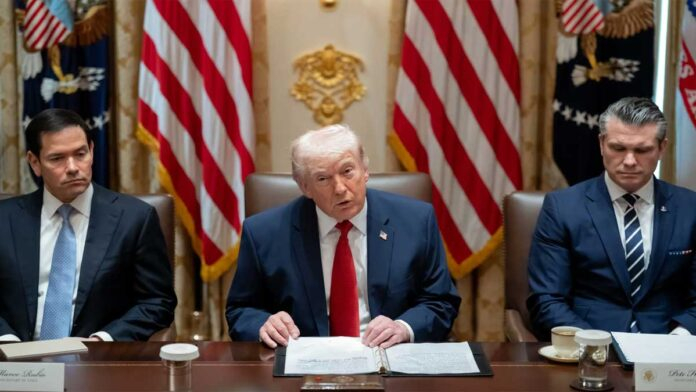
U.S. President Donald Trump convened an emergency Situation Room meeting at the White House after Iran escalated tensions in the Strait of Hormuz, defying earlier assurances that the vital shipping corridor would remain open.
The move follows confirmed reports of Iranian forces opening fire on commercial vessels attempting to transit the narrow waterway, triggering alarm across global energy markets and intensifying the standoff between Washington and Tehran.
Iran Reverses Course, Imposes Strict Control
Iran’s Islamic Revolutionary Guard Corps (IRGC) moved to impose what it described as “strict control” over the strait, effectively restricting commercial shipping traffic. The decision marked a sharp reversal less than 24 hours after Iranian officials had declared the passage “completely open.”
The IRGC warned that vessels entering the strait could be treated as cooperating with hostile forces, raising the risk of further confrontations at sea.
🇺🇸 White House Response and Strategic Calculations
Inside the White House, senior national security officials joined President Trump to assess potential responses, including military, diplomatic, and economic options.
Trump reiterated that the United States would not be “blackmailed,” maintaining that the naval blockade of Iranian ports would remain in force until a broader agreement is reached.
Lawmakers and senior officials briefed on the crisis are focusing on ensuring freedom of navigation and safeguarding allied commercial shipping routes through the region.
Oil Markets and Global Trade Under Pressure
The Strait of Hormuz remains one of the world’s most critical maritime chokepoints, handling a significant share of global oil exports.
With traffic disrupted, analysts are warning of immediate and cascading effects across global markets, including rising crude prices, shipping delays, and increased insurance costs for vessels navigating high-risk zones.
Energy-dependent economies, particularly in Asia, are closely monitoring the situation as supply uncertainties grow.
Diplomatic Strain and Regional Fallout
The escalation comes amid fragile diplomatic conditions in the Middle East, including a recently negotiated ceasefire between Israel and Lebanon that could face indirect strain as tensions intensify.
Iran’s decision to reimpose restrictions has further complicated already stalled negotiations with the United States, with both sides maintaining firm positions on sanctions and maritime security.
Security analysts warn that continued escalation could draw in additional regional actors and increase the risk of broader confrontation across key shipping lanes.