New Delhi, India — May 4, 2026
The Ministry of Health and Family Welfare has unveiled updated guidelines for the National Child Health Program (RBSK 2.0), introducing digital health tracking and expanded medical screening for children across the country.
The new framework was presented during a national summit on public healthcare innovations, reflecting lessons learned over the past decade and addressing evolving child health needs.
Digital Health Cards and Real-Time Monitoring
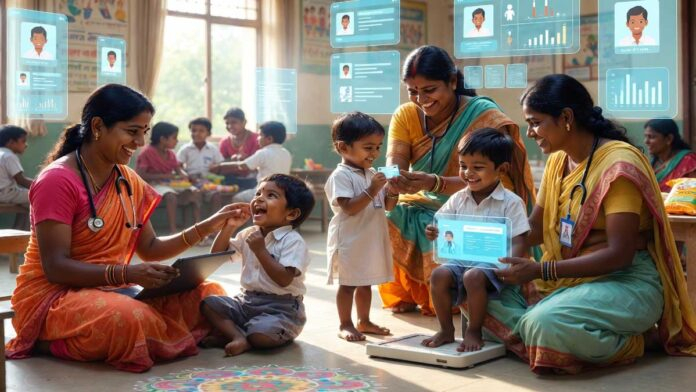
A key highlight of RBSK 2.0 is the introduction of digital health cards for children from birth to 18 years. The system will create a real-time health database, enabling continuous monitoring, early diagnosis, and streamlined treatment.
The initiative also includes a robust referral tracking system, ensuring that children identified with health conditions receive timely treatment and follow-up care at higher medical centers.
This end-to-end tracking—from screening to recovery—is expected to reduce gaps in treatment and improve healthcare outcomes.
Mobile Health Teams to Expand Reach
The program will continue to rely on mobile health teams conducting screenings at schools and Anganwadi centers, ensuring accessibility across urban and rural populations.
The initiative integrates efforts from multiple departments, including health, education, and women and child development, to enhance coordination and outreach.
These institutions will also play a central role in raising health awareness and tracking children’s well-being over time.
Expanded Screening Beyond Traditional ‘4D’ Approach
Previously focused on the “4D” model—Defects at birth, Diseases, Deficiencies, and Developmental delays—RBSK 2.0 significantly broadens its scope.
The updated guidelines now include screening and management of:
- Non-communicable diseases (NCDs) such as diabetes and hypertension
- Mental health conditions
- Behavioral and developmental issues
This marks a shift from survival-focused healthcare to a more holistic child development approach, addressing both physical and mental well-being.
Focus on Technology-Driven Healthcare
Officials say the integration of digital tools will improve transparency, efficiency, and accountability in service delivery.
By leveraging technology, the government aims to build a more responsive and inclusive healthcare ecosystem for children, ensuring no case goes unnoticed or untreated.