Dubai, United Arab Emirates — April 8, 2026
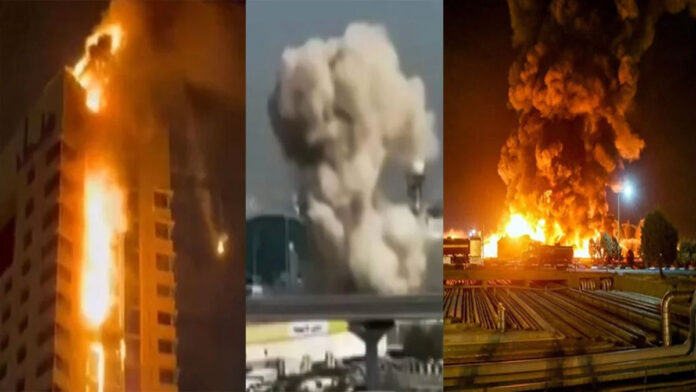
A fragile ceasefire between the United States and Iran appeared to unravel within hours, as missile and drone attacks were reported in parts of the Gulf region, alongside a major explosion inside Iran, intensifying fears of renewed escalation in the Middle East.
Reports indicate that targets in the United Arab Emirates and Kuwait came under attack, raising concerns over the durability of the recently announced two-week truce.
Former US Official Warns Ceasefire Needs Enforcement
Joe Kent, who recently stepped down as director of the U.S. National Counterterrorism Center, emphasized that a ceasefire alone is insufficient without strict enforcement.
He stated that ensuring restraint—particularly by Israel—would be critical to maintaining stability. According to Kent, continued military actions by any party could quickly undermine the agreement.
Role of Israel Seen as Crucial
Kent’s remarks underscore the importance of Israel’s role in the evolving situation. Analysts believe that if Israel limits its military operations, diplomatic efforts could gain traction and reduce regional tensions.
The comments come at a time when the United States and Iran are attempting to stabilize the situation following weeks of conflict.
Conflict Timeline and Escalation
The current crisis traces back to February 28, when the United States and Israel launched strikes on Iran. According to reports, the attack resulted in the deaths of several senior figures, including Iran’s Supreme Leader Ali Khamenei.
Iran responded with retaliatory strikes targeting U.S. military installations across the region, including locations in Bahrain, Kuwait, and areas linked to the UAE.
Global Energy Concerns Rise
The escalation has had significant implications for global energy markets. The closure of the strategically vital Strait of Hormuz—through which nearly 20% of the world’s oil supply passes—has disrupted supply chains and heightened concerns over energy security.
The latest developments threaten to further strain global oil and gas supplies, potentially impacting economies worldwide.