Tehran — March 16, 2026
Iran Warns US and Israel Over War Damages, Rejects Ceasefire Claims
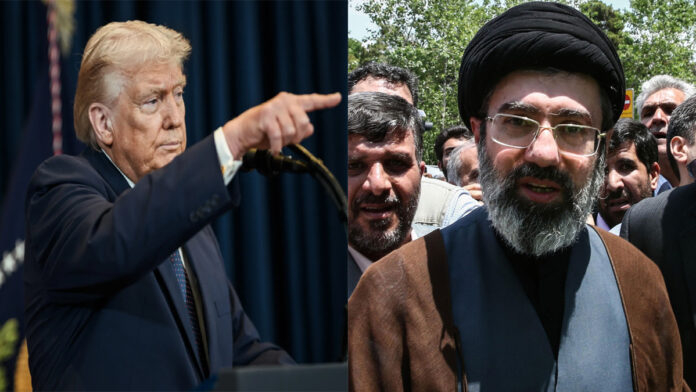
Iran’s Supreme Leader Mojtaba Khamenei has issued a strong warning to the United States and Israel, demanding compensation for damages caused during the ongoing conflict. He said that countries responsible for the destruction would have to pay for the losses or face consequences.
The conflict, which reportedly began on February 28, has now entered its third week, with missile and drone attacks continuing across the region.
Meanwhile, Iran’s Foreign Minister Seyed Abbas Araghchi reiterated that Tehran has never requested a ceasefire and will continue defending itself as long as necessary.
Iran Demands Compensation for War Losses
In a statement shared through an online message cited by international media reports, Mojtaba Khamenei said Iran would seek compensation from what he described as enemy countries responsible for the damage.
He warned that if compensation was denied, Iran could seize assets belonging to those countries or take action to cause equivalent economic losses.
The message also emphasized that Iran intends to avenge those killed during the conflict. According to Iranian state media, the statement was read on national television by a news anchor.
Khamenei added that Iran could open additional fronts if required, but emphasized that Tehran seeks peaceful relations with neighboring countries and would target only locations from which attacks are launched.
Trump Claims Conflict Nearing Final Stage
U.S. President Donald Trump has repeatedly claimed that the war against Iran is entering its final phase.
Trump said Iran’s military capabilities had been significantly weakened and that Tehran no longer has the ability to mount a major counterattack.
However, statements from Iranian officials suggest that Tehran does not share this assessment and remains prepared to continue its military response.
Iran Says It Never Requested Ceasefire or Negotiations
Speaking in an interview with CBS News, Foreign Minister Abbas Araghchi dismissed claims that Iran was seeking negotiations or a ceasefire.
“We have never asked for a ceasefire,” Araghchi said. “Iran will continue to defend itself for as long as necessary.”
He also described the conflict as an “illegal war” and suggested that Iran’s military campaign would continue until Washington changes its approach.
Iran’s Position on the Strait of Hormuz
Araghchi also addressed concerns regarding the Strait of Hormuz, one of the world’s most important shipping routes for oil.
He said Iran had not closed the waterway, but noted that the Iranian military determines which vessels are allowed to pass through the area.
Nuclear Program and Uranium Issue
The Iranian foreign minister also reiterated that Iran had never attempted to develop nuclear weapons.
According to Araghchi, Iran had previously been willing to reduce uranium enrichment levels before the conflict escalated. However, he said that nuclear materials and related infrastructure were damaged during recent attacks and are currently buried under debris.
He added that there are no immediate plans to retrieve the materials.
Rising Regional Tensions
The ongoing conflict continues to raise concerns about broader regional stability, maritime security, and global energy supplies.
Analysts warn that escalating military exchanges could have significant implications for international shipping routes, oil markets, and geopolitical relations.