Riyadh / Tehran — March 14, 2026
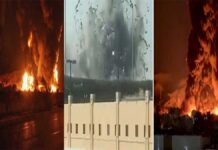
The escalating conflict in West Asia appears to be taking a more dangerous turn as reports indicate that Iran carried out a missile strike on Prince Sultan Air Base in Saudi Arabia, a facility known to host U.S. military forces.
According to reports circulating in regional media, the strike allegedly damaged five U.S. Air Force refueling aircraft stationed at the base. The aircraft were reportedly hit while on the ground.
There have been no confirmed reports of casualties, and sources suggest the aircraft were not completely destroyed but sustained damage requiring repairs.
Strike Targets US Military Presence in Saudi Arabia
The reported attack targeted Prince Sultan Air Base, located southeast of Riyadh, which serves as a strategic base for U.S. air operations in the region.
Sources indicated that the strike involved missiles and possibly drone attacks, damaging several aerial refueling tankers used by the U.S. Air Force.
Officials have not yet provided detailed assessments of the damage, and there has been no immediate confirmation from U.S. or Saudi authorities.
Earlier Incidents Involving US Aircraft
Recent weeks have seen multiple incidents involving U.S. military aircraft in the region.
-
A U.S. KC-135 aircraft reportedly crashed in western Iraq, resulting in the deaths of six crew members on board.
-
On March 1, three U.S. F-15 fighter jets crashed in Kuwait, reportedly due to a friendly-fire incident.
-
Reports indicated that a Kuwaiti F-18 fighter jet mistakenly targeted the aircraft, though all aircrew survived the incident.
These incidents have raised concerns about operational risks and heightened military activity across the region.
Conflict in West Asia Reaches Critical Phase
The broader conflict in West Asia has now entered its 15th day, with missile launches, drone attacks, and air operations reported across multiple countries.
According to reports, the escalation began on February 28, following military strikes involving the United States and Israel targeting Iranian positions.
Since then, retaliatory actions and military exchanges have intensified across the region, increasing geopolitical tensions and raising concerns about wider instability.
Observers say the continuing confrontation could have significant security, economic, and geopolitical consequences globally, particularly due to the region’s importance for energy supply routes and international trade.