Dubai, United Arab Emirates , Tel Aviv and Jerusalem ,Tehran — March 11, 2026
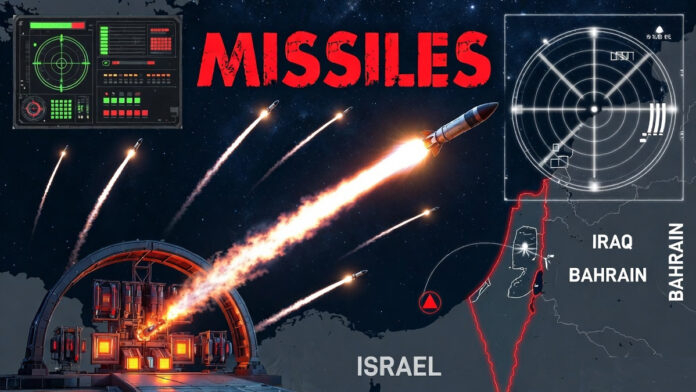
Tensions across the Middle East escalated sharply after Iran launched cluster warhead missiles toward Israel, Iraq, and Bahrain, marking one of the most significant military developments in the ongoing regional conflict.
Iranian military sources released video footage showing the launch of multi-warhead missiles, designed to strike multiple targets from a single missile. The footage demonstrates advanced missile technology intended to increase the effectiveness of attacks across a wider area.
The latest strikes come as the regional confrontation, which began in late February, enters its twelfth day, raising concerns about further escalation across West Asia.
Missile Strikes Target Israel, Iraq, and Bahrain
According to Iranian military statements, the missiles were directed primarily toward Israel, Iraq, and Bahrain.
Iran claimed the strikes targeted locations including Tel Aviv and Jerusalem in Israel, U.S. military installations in Iraq, and strategic sites in Bahrain.
The attacks reportedly involved cluster-type warheads, which separate into multiple smaller payloads during flight, enabling them to target several locations simultaneously.
Multi-Warhead Missile Technology
Iranian commander Majid Mousavi stated that Iranian forces are now deploying warheads weighing at least one ton (approximately 1,000 kilograms) in their missile systems.
According to Iranian officials, these multi-warhead missiles are designed to overwhelm air defense systems by dispersing multiple explosive units across a broad area.
Defense analysts say such systems are intended to increase strike effectiveness and complicate interception efforts by missile defense systems.
Impact in Israel
Israeli defense authorities reported that several incoming missiles were intercepted by Israel’s air defense systems.
Iranian media claimed the strikes targeted military-related facilities near Tel Aviv and Haifa, including areas close to satellite and strategic infrastructure centers.
Israeli officials have not confirmed the full extent of damage but indicated that defensive systems successfully neutralized several threats before impact.
Bahrain Declares Force Majeure at Oil Facilities
In Bahrain, missile and drone activity was reported near Manama and the Sitra oil refinery area.
Following the incidents, the state-owned energy company Bapco Energies declared “force majeure,” indicating extraordinary circumstances affecting operations.
Energy analysts are closely monitoring the situation due to Bahrain’s role in regional energy infrastructure and oil supply networks.
U.S. Base Targeted in Iraq
Iranian sources also claimed that ballistic missiles were launched toward a major U.S. military base in Iraq’s Kurdistan region.
Officials said the base is among the largest American military installations in Iraq. U.S. defense authorities have not publicly confirmed the full details of the attack but have acknowledged heightened security measures.
Regional Air Defenses Activated
Several Gulf countries have responded by activating defensive systems.
According to regional security reports:
Saudi Arabia, Kuwait, and the United Arab Emirates activated air defense systems.
Authorities in those countries reported intercepting multiple incoming missiles or drones.
Military forces across the region remain on high alert amid rising tensions.
Conflict Status as of March 11, 2026
The ongoing conflict that began on February 28, 2026 has now entered its 12th day, with escalating military actions across the region.
Recent developments include:
U.S. casualties: The Pentagon confirmed 7 American soldiers killed and around 140 injured during the conflict.
Regional escalation: Missile and drone activity has increased across multiple countries.
Political developments: Reports indicate that Mojtaba Khamenei has been appointed Iran’s new Supreme Leader, while U.S. President Donald Trump has warned Iran of serious consequences if attacks continue.
Security analysts warn that the expanding scope of the conflict could increase instability across the Middle East and affect global energy and security dynamics.