
Tokyo, Japan — March 7, 2026
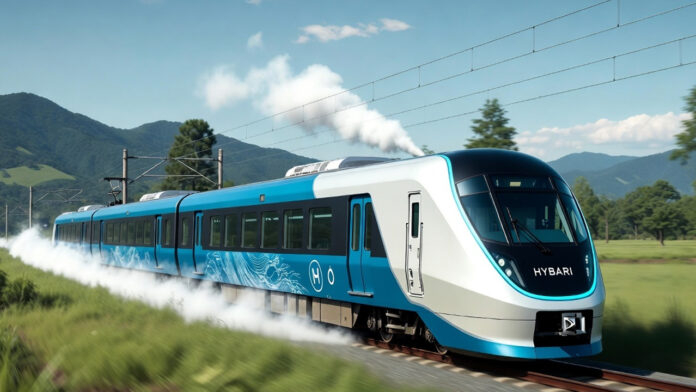
Japan has successfully completed a commercial run of its first fully hydrogen-powered passenger train, marking a significant milestone in the global shift toward zero-emission transportation.
The train, known as HYBARI, represents a collaboration between JR East and several technology partners. The project aims to replace diesel-powered trains on routes that are not yet electrified.
Industry analysts say the technology could serve as a blueprint for clean railway systems worldwide, particularly in regions seeking alternatives to fossil fuel-powered trains.
Key Features of the HYBARI Hydrogen Train
The HYBARI train uses a hybrid system combining hydrogen fuel cells and lithium-ion batteries.
This setup allows the train to generate electricity onboard while also storing additional power for auxiliary systems.
Zero Carbon Emissions
Unlike traditional diesel trains, the hydrogen-powered system produces only water vapor as a byproduct, meaning the train operates with zero direct carbon emissions.
This makes it a promising solution for reducing pollution in railway transportation.
Speed and Range
According to developers, the train can travel at speeds of approximately 100 kilometers per hour (about 62 mph).
With a full hydrogen tank, it can cover up to 140 kilometers (about 87 miles) before refueling.
How Hydrogen Train Technology Works
The HYBARI train operates through a process involving hydrogen fuel cells.
Hydrogen Storage
High-pressure hydrogen tanks are installed on the train’s roof.Chemical Reaction
Hydrogen reacts with oxygen from the air inside the fuel cell system.Electricity Generation
The reaction generates electricity that powers the train’s electric motors.Energy Storage
Excess energy is stored in lithium-ion batteries and used for systems such as lighting, air conditioning, and onboard equipment.
What It Means for Japan’s Rail Network
Hydrogen trains could play a major role in Japan’s rail modernization plans.
Many rural railway lines in Japan are still powered by diesel trains, primarily because installing full electric infrastructure can be expensive.
Hydrogen-powered trains allow these routes to transition to clean energy without major electrification upgrades.
Another advantage is quiet operation, as hydrogen trains produce significantly less noise compared with diesel locomotives.
JR East has also announced an ambitious goal of making its railway operations net-zero carbon emissions by 2050.
Global Competition in Hydrogen Rail Technology
Japan’s hydrogen train development comes amid a growing global push toward hydrogen-powered transportation.
The world’s first commercial hydrogen train service was launched in Germany in 2022 using the Coradia iLint developed by Alstom.
Japan’s HYBARI system is designed to improve efficiency and reduce operating costs compared with earlier hydrogen rail systems.
Hydrogen Rail Efforts in India
Several countries are now exploring hydrogen trains as part of their clean energy strategies.
India, for example, is working on a hydrogen-powered heritage train project, expected to operate on the Jind–Sonipat railway route in Haryana as part of pilot testing.
Major Challenge: Hydrogen Production and Storage
Despite the environmental benefits, hydrogen-powered transportation still faces challenges.
One of the biggest hurdles is the production of green hydrogen, which is generated using renewable energy sources. Currently, producing and storing hydrogen remains relatively expensive compared with conventional fuels.
To address this, Japan is investing in hydrogen infrastructure, including fueling stations and supply networks, to support future hydrogen-powered vehicles and trains.
Experts say that as hydrogen technology becomes more affordable, projects like HYBARI could play a critical role in shaping the next generation of sustainable global transportation systems.











Comments are closed.