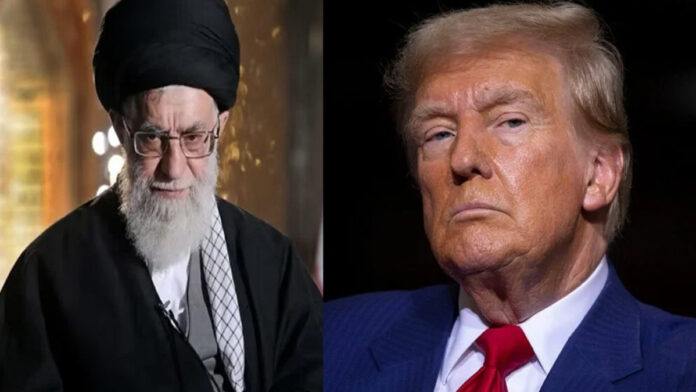
Tehran / Washington, February 4, 2026
Tensions between Iran and the United States continue to escalate across West Asia, even as Tehran has issued its clearest signal yet that it is open to diplomatic engagement with Washington. In a sharp contrast, the US Navy shot down an Iranian drone that was moving toward an American aircraft carrier, underscoring the fragile and volatile nature of the situation.
The incident highlights a growing contradiction: efforts toward dialogue on one hand, and rising military confrontation on the other, raising questions over whether diplomacy can prevail or whether the region is headed toward deeper conflict.
Iran Signals Willingness for Talks With the US
Iranian President Masoud Pezeshkian said on Tuesday that he has instructed the country’s foreign minister to pursue “reasonable and just negotiations” with the United States—provided the environment is free from threats and excessive demands.
This marks the strongest indication so far that Tehran is prepared to explore diplomatic channels with Washington, a move seen as a significant shift under Pezeshkian’s reformist leadership.
Khamenei’s Backing Seen as Key
The announcement also suggests that Pezeshkian has received backing from Iran’s Supreme Leader Ayatollah Ali Khamenei, who had previously rejected talks with the US.
The shift comes amid heightened tensions following Iran’s violent crackdown on nationwide protests last month, which significantly worsened relations with Washington.
President Calls for Threat-Free Negotiation Environment
Posting in both English and Persian on social media platform X, Pezeshkian said the decision followed requests from regional allies urging Iran to respond to a negotiation proposal from the US president.
“I have instructed the foreign minister to advance rational and just talks in line with dignity, wisdom, and foresight—if an appropriate atmosphere exists, free from threats and unjust expectations,” Pezeshkian wrote.
He also urged caution, instructing Foreign Minister Abbas Araghchi to proceed carefully.
So far, the United States has not officially confirmed that any talks are planned. The United Arab Emirates, meanwhile, said the region does not need another war.
US Navy Shoots Down Iranian Drone
Even as diplomatic signals emerged, the US military confirmed that the US Navy intercepted and shot down an Iranian drone that was approaching a US aircraft carrier operating in the region.
The incident reinforces concerns that military miscalculations could quickly derail any diplomatic momentum.
Turkey’s Quiet Mediation Efforts
Behind the scenes, Turkey has reportedly been working to facilitate potential talks. The effort coincided with a regional tour by US Middle East envoy Steve Witkoff.
However, uncertainty remains high—particularly because US President Donald Trump has made Iran’s nuclear program a central condition of any negotiation.
Trump previously ordered airstrikes on three Iranian nuclear sites during Israel’s 12-day conflict with Iran in June, further complicating diplomatic prospects.
Indirect Talks Likely First: Shamkhani
Late Monday, Iran-backed Lebanese group Hezbollah’s allied pan-Arab channel Al Mayadeen aired an interview with Ali Shamkhani, a senior adviser to Khamenei and a member of Iran’s Supreme National Security Council.
Shamkhani said that if talks take place, they would begin indirectly. Direct negotiations would follow only if progress appears possible. He added that any dialogue would be strictly focused on nuclear issues, signaling Tehran’s red lines.
A Region on Edge
With military incidents unfolding alongside diplomatic overtures, West Asia remains on edge. Analysts warn that while the door to diplomacy appears slightly open, the margin for error is dangerously thin, and a single misstep could push the region toward wider confrontation.