Kolkata, April 28, 2026
High-Stakes Political Contest Takes Center Stage
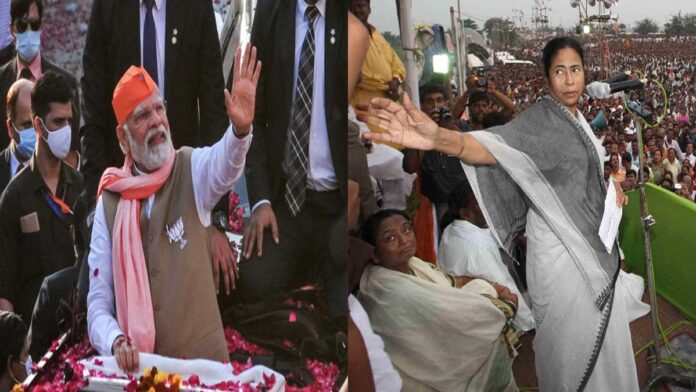
West Bengal’s political landscape is witnessing an intense battle ahead of the 2026 elections, with ideological narratives and identity politics shaping the campaign.
The contest between the Bharatiya Janata Party and All India Trinamool Congress has evolved beyond governance, focusing on cultural identity, voter sentiment, and grassroots mobilization.
🛕 Cultural Messaging vs Political Positioning
Prime Minister Narendra Modi has made visits to key religious and cultural sites such as:
- Dakshineswar Temple
- Belur Math
- Kalighat Temple
These visits are being interpreted by analysts as part of a broader effort to connect with cultural and spiritual sentiments among voters.
Campaign slogans invoking religious identity have gained visibility, reflecting a shift in political messaging on the ground.
🧭 BJP Strategy: Ground Mobilization and Security Messaging
The BJP has intensified its campaign with senior leadership taking an active role:
- Amit Shah has been directly overseeing campaign efforts in Kolkata
- Sunil Bansal is focusing on booth-level organization and micro-management
The party has also emphasized security assurances, including deployment of central forces, to address voter concerns stemming from past election-related tensions.
🟢 TMC Counter: Regional Identity and Welfare Narrative
Chief Minister Mamata Banerjee is leading the campaign for the ruling party, positioning the contest as one centered on regional pride and cultural identity.
- Focus on Bengali identity and local traditions
- Emphasis on state rights and pending central funds
- Active youth outreach led by Abhishek Banerjee
The party is also highlighting governance issues and welfare initiatives as part of its campaign strategy.
📊 Key Battleground: 142 Crucial Seats
The upcoming phases of voting will cover 142 constituencies, many of which are considered strongholds of the ruling party.
- In the previous election, BJP secured limited success in these regions
- This time, issues such as local governance, corruption allegations, and voter outreach are expected to play a key role
Both parties are focusing heavily on these seats, making them critical to the final outcome.
📉 What to Watch
As campaigning intensifies, several factors will shape the election outcome:
- Voter response to competing narratives
- Effectiveness of grassroots mobilization
- Turnout in rural vs urban constituencies
- Impact of security arrangements and campaign messaging
📌 Outlook
West Bengal’s 2026 election is shaping up as a closely watched political contest, with broader implications for national politics.
With both sides sharpening their strategies, the coming weeks are likely to see heightened campaigning, sharper rhetoric, and increased voter engagement across the state.