Jerusalem/Washington/Tehran — March 7, 2026
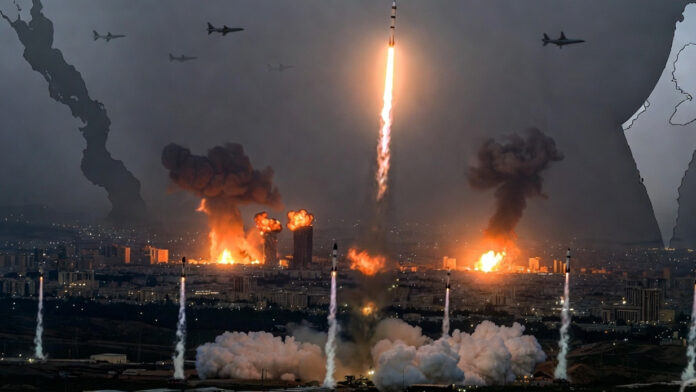
The ongoing conflict in West Asia intensified dramatically on its eighth day, with Iran launching ballistic missiles toward Israel in retaliation, while the United States signaled a significant escalation through planned heavy airstrikes on Iranian targets.
US Treasury Secretary Scott Bessent, speaking on Fox News, stated that the US would carry out its “biggest bombing campaign” overnight, focusing on destroying Iranian missile launchers and production facilities. Bessent accused Iran of attempting to create economic chaos, particularly through influence over the Strait of Hormuz, a critical global oil transit route.
Explosions rocked western Tehran as Israeli forces conducted new waves of airstrikes on the Iranian capital, according to reports from AFP and Iranian state media. Smoke plumes were visible over parts of the city, with blasts reported in residential and strategic areas.
In a related development, Saudi Arabia’s air defenses successfully intercepted and destroyed multiple threats overnight. The Saudi Ministry of Defense confirmed neutralizing 16 drones in four phases targeting the Shaybah oil field in the Empty Quarter, along with a ballistic missile and a cruise missile aimed at Prince Sultan Air Base near Al-Kharj. Additional interceptions occurred near Riyadh and industrial zones, marking repeated attempts on Saudi infrastructure.
Iran also experienced seismic activity, with a 4.1 magnitude earthquake recorded west of Bandar Abbas in southern Iran, per the US Geological Survey. No immediate links to military actions were confirmed, and reports indicated no major damage or casualties from the tremor.
The conflict, which began with joint US-Israeli strikes on February 28 targeting Iranian military and leadership sites, has expanded regionally. Iranian responses have included missile barrages on Israel and attempts against US-allied Gulf states. US President Donald Trump has demanded Iran’s “unconditional surrender,” rejecting any negotiations short of that outcome.
Casualties continue to mount on multiple fronts, with strikes affecting civilian areas in Iran and Lebanon. Global oil prices remain volatile due to fears over supply disruptions in the region.
Authorities in affected countries are on high alert, with no immediate signs of de-escalation as military operations persist.