🇺🇸 America in Deadlock: Historic Shutdown and Mass Protests Shake Washington
The United States of America stands at a political crossroads.
As the 2025 government shutdown stretches into its record-breaking third week, Washington D.C. has become the epicenter of public anger, fiery protests, and constitutional debates — all under the global spotlight.
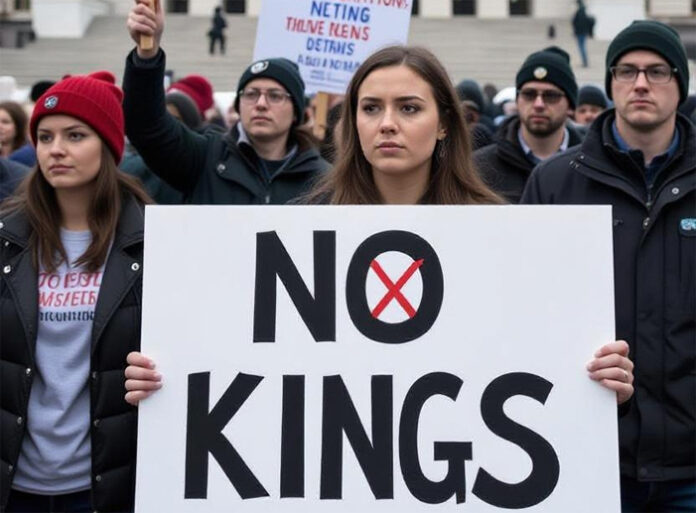
From Pennsylvania Avenue to Times Square, thousands of Americans have joined the “No Kings” movement, a mass protest campaign denouncing what activists call “executive overreach” and “the death of checks and balances.”
“We didn’t elect a monarch — we elected a president,”
shouted protesters outside the U.S. Capitol, waving American flags and placards reading ‘Democracy, Not Dynasty!’
The crisis, which began over a budget deadlock between Congress and the White House, has spiraled into a full-blown power struggle threatening America’s political institutions — and its image abroad.
🏛️ How the Shutdown Began: Political Power at a Breaking Point
The shutdown began after budget negotiations collapsed between the House of Representatives and the Trump administration, following disputes over defense spending, social welfare cuts, and presidential emergency powers.
Speaker Mike Johnson and several Republican lawmakers refused to approve a bipartisan spending bill that limited executive authority — a move critics claim was coordinated by the White House to centralize control.
By October 1, 2025, the U.S. government had officially ceased most federal operations, leaving hundreds of thousands of workers unpaid and major agencies (including the IRS and EPA) paralyzed.
“This is not governance — it’s political hostage-taking,”
said Senate Majority Leader Chuck Schumer in a heated press conference.
“Every hour this shutdown continues, America loses credibility and compassion.”
⚖️ ‘No Kings’ Movement: Citizens Rise Against Executive Overreach
The “No Kings” protests, organized by a coalition of civil society groups, students, and government employees, began peacefully in Washington before spreading to major cities like New York, Chicago, Los Angeles, and Seattle.
Protesters accuse the Trump administration of using the shutdown as a pretext to consolidate power — especially after reports emerged of executive orders expanding surveillance, restricting press access, and threatening mass firings of federal employees who refused to comply with new loyalty pledges.
“Our democracy is not for sale, and it’s not for one man to command,”
said Alicia Romero, a protest leader from Texas.
“We’re here to defend the Constitution — not to kneel to a throne.”
The demonstrations have drawn comparisons to the 1960s Civil Rights marches, combining music, art, and digital activism. Social media has amplified the slogan #NoKings, which has trended globally for days, garnering support from international figures and human rights organizations.
⚔️ Legal Challenges and Power Struggles in Washington
The judiciary has entered the fray. A federal court temporarily blocked the administration’s threat to fire furloughed employees, ruling it “unconstitutional coercion under duress.”
The Supreme Court, however, remains divided. Several justices have hinted that the crisis could trigger a constitutional test of executive powers unseen since the 1970s Watergate era.
Meanwhile, behind closed doors, bipartisan negotiations continue, but sources say trust between party leaders has completely collapsed.
“This isn’t just a budget issue anymore — it’s an identity crisis for American democracy,”
noted Dr. Samuel Price, a political historian at Harvard University.
“We are witnessing the erosion of institutional respect that once held the republic together.”
🌎 Global Reaction: Allies Watch with Unease
Across the Atlantic, European and Asian allies are growing anxious about the U.S.’s ability to govern itself.
The European Union’s foreign policy chief said the prolonged shutdown “undermines confidence in America’s global leadership.”
Financial markets have also shown volatility: the U.S. dollar slipped 1.8%, while global investors shifted toward gold and the yen as safe havens. The IMF has warned that a sustained shutdown could shave 0.4% off U.S. GDP in the last quarter of 2025.
💬 Inside the Streets: Fear, Frustration, and Hope
For ordinary Americans, the shutdown has real consequences.
From unpaid postal workers to suspended food aid programs, millions are feeling the pinch.
In Washington, restaurants near Capitol Hill are nearly empty, and federal museums remain closed.
Yet amid the frustration, there’s also resilience.
“We’ve survived wars and recessions — we’ll survive this too,”
said Michael Torres, a furloughed park ranger from Virginia.
“But only if our leaders remember who they work for.”
🔮 The Road Ahead: Will Democracy Prevail?
Political analysts say the coming weeks will determine the fate of the shutdown and the future of American democracy.
If no agreement is reached soon, credit ratings could be downgraded, and public trust in Washington could reach historic lows.
Still, the “No Kings” movement has shown that civic resistance remains alive — a reminder that democracy endures not just in laws, but in people’s voices.
“The world is watching,”
wrote The Washington Post in an editorial.
“How the United States resolves this crisis will reveal whether its institutions still serve the people — or power itself.”