Washington / Brussels, January 25, 2026
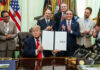
The U.S. President Donald Trump has reignited tensions within the North Atlantic Treaty Organization (NATO) by issuing a stark warning to member countries: increase defense spending to 3% of GDP or risk losing America’s security guarantees.
Trump’s remarks have sent shockwaves across Europe, raising concerns about the future cohesion of the world’s most powerful military alliance at a time of heightened global instability.
The Core of Trump’s Ultimatum
For years, NATO members have been encouraged to spend at least 2% of their GDP on defense, a benchmark agreed upon at previous alliance summits. Trump has now raised the bar, demanding that allies commit 3% of GDP to military spending.
More significantly, Trump warned that countries failing to meet this threshold could lose the protection of NATO’s Article 5, the alliance’s foundational clause stating that an attack on one member is considered an attack on all.
‘America First’ Defense Argument
Trump defended his position by reiterating his “America First” policy stance, arguing that the United States should not shoulder a disproportionate share of NATO’s defense burden.
He stated that U.S. taxpayers should not be responsible for defending wealthy European nations that, in his view, are capable of investing more in their own security but have failed to do so.
Ukraine War Context and Strategic Pressure
Trump also referenced the ongoing Ukraine conflict, suggesting that European nations must become more self-reliant in matters of defense amid growing global instability. His comments underline a broader argument that Europe should take greater responsibility for regional security rather than relying primarily on U.S. military backing.
Reaction from NATO and European Allies
The response across Europe has been one of unease and concern:
United Kingdom and Germany: Officials in both countries have warned that a sudden jump to 3% defense spending would place significant strain on national budgets, particularly during a period of economic uncertainty.
France: French leadership has renewed calls for European strategic autonomy, advocating the development of an independent European defense capability less reliant on Washington.
Security experts caution that such statements could undermine NATO unity, potentially emboldening rival powers such as Russia, which has long sought to exploit divisions within the alliance.
What Lies Ahead for NATO
Trump’s ultimatum is expected to dominate discussions at the upcoming NATO summit, where defense spending and alliance commitments are already sensitive topics.
Analysts warn that if European countries resist the demand, it could trigger the most serious crisis for NATO since the Cold War, raising questions about the alliance’s long-term structure, leadership, and relevance.
While no formal policy changes have been enacted, the warning alone has intensified debate over burden-sharing, transatlantic trust, and the future of collective security in the West.