Memphis, Tennessee, March 23, 2026
U.S. President Donald Trump appeared to recalibrate responsibility for the escalating Iran conflict, publicly highlighting Defense Secretary Pete Hegseth as one of the earliest proponents of military action against Tehran’s nuclear program.
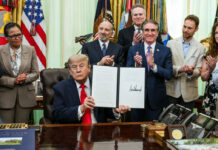
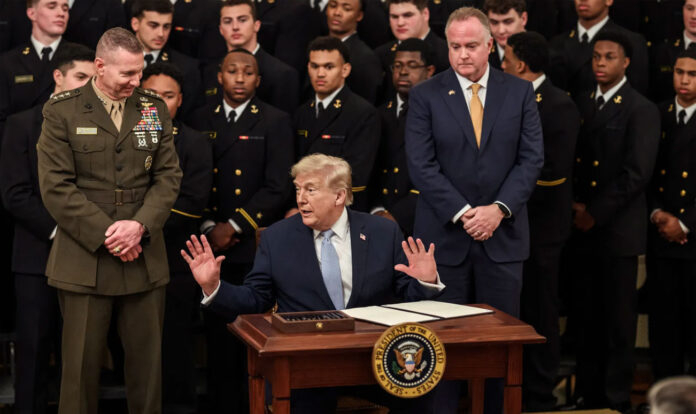
Speaking at a public safety roundtable with the Tennessee Safe Task Force in Memphis, Trump’s remarks have drawn significant attention across U.S. political and defense circles.
Trump’s Remarks Put Spotlight on Hegseth
During the discussion, Trump directly credited Hegseth for pushing early intervention.
“Pete, I think you were the first one to speak up… you said let’s do it because you can’t let them have a nuclear weapon,” Trump said.
He described the decision-making process as consultative, noting that multiple officials were involved in discussions about Iran, which he labeled a “purveyor of terror.” However, analysts observed that Trump’s framing placed unusual emphasis on Hegseth’s role.
Conflict Background: Escalation After Joint Airstrikes
The current war traces back to the February 28 joint U.S.-Israel airstrikes on Iranian targets, which sharply escalated tensions and triggered sustained retaliation from Iran.
Since then:
- Iran has launched repeated counterattacks
- Regional instability has intensified
- Prospects for quick resolution have diminished
Political Timing: Midterm Pressure Mounts
Trump’s comments come as he campaigns ahead of crucial U.S. midterm elections, where control of Congress is at stake.
The prolonged conflict has:
- Seen declining public support
- Raised concerns over rising costs and casualties
- Triggered bipartisan scrutiny over strategic clarity
Political analysts suggest Trump’s remarks may reflect an effort to redistribute accountability as pressure builds domestically.
Hegseth and ‘Operation Epic Fury’
As the face of the U.S. military campaign, Hegseth has consistently defended operations under the banner of “Operation Epic Fury.”
In earlier statements, he said:
“We didn’t start this war, but under President Trump we’re finishing it.”
While initial rhetoric hinted at regime change, Hegseth later clarified that the objective is not to create an “endless war,” signaling a shift toward a more limited military strategy.
Notably, Hegseth did not publicly respond to Trump’s latest remarks during the Memphis event.
Shifting Narrative as War Grows Complex
Observers note that Trump’s comments may indicate a broader shift in narrative as the conflict becomes more complicated.
Iran’s sustained retaliation and resilience have:
- Reduced expectations of a swift U.S. victory
- Increased military and diplomatic pressure
- Heightened global concern over escalation
Hegseth has maintained that ultimate authority rests with the president, stating that Trump “controls the throttle” on major decisions.
Pause in Strikes Signals Diplomatic Opening
Trump’s remarks followed his announcement of a five-day pause in planned strikes on Iranian infrastructure, a move widely interpreted as an attempt to:
- Ease domestic criticism
- Create space for diplomatic engagement
- Reassess military strategy
Known for his deal-making approach, Trump may be positioning for potential negotiations with Iran, even as hostilities continue.