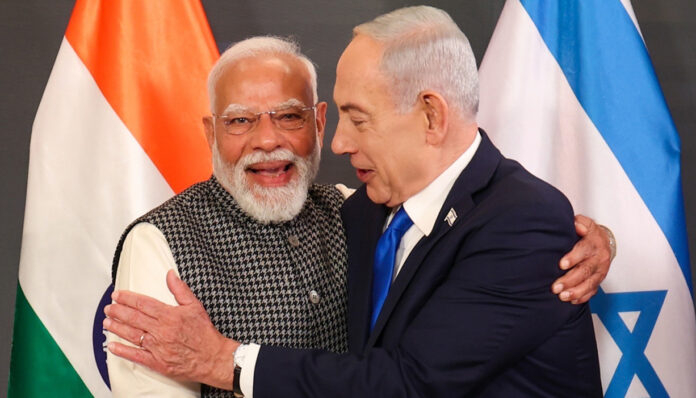
New Delhi, India — March 4, 2026
Israel’s Ambassador to India, Reuven Azar, has said that the recent military strikes on Iran by the United States and Israel were launched after what he described as an “operational opportunity.” According to the envoy, the timing of the operation came shortly after Indian Prime Minister Narendra Modi concluded his visit to Israel.
Azar made the remarks in an interview with The Indian Express, explaining that the decision to carry out the strikes was taken only after evaluating the evolving security situation.
Decision Taken After Modi’s Visit
According to Azar, while Prime Minister Narendra Modi was visiting Israel, no final decision had been made regarding military action against Iran.
He stated that during Modi’s visit, discussions between the two countries focused on regional developments and bilateral cooperation, but the matter of a possible military strike was not finalized at that time.
The Israeli envoy noted that the final decision emerged later after strategic assessments.
Security Cabinet Approval
Azar explained that after Prime Minister Modi returned from his visit, Israeli authorities spent approximately two days reviewing the situation.
Following this assessment, the Israeli security cabinet approved the military operation, which was launched on Saturday morning.
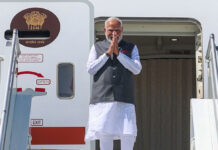
Prime Minister Modi had visited Israel on February 25–26 for a two-day official trip, marking his second visit to the country. His first visit in 2017 was widely regarded as a milestone in strengthening India–Israel relations.
Strengthening India–Israel Strategic Ties
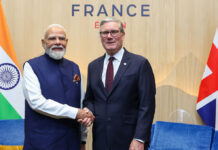
During the latest visit, India and Israel elevated their bilateral relationship to what leaders described as a “special strategic partnership.”
After talks between Prime Minister Narendra Modi and Israeli Prime Minister Benjamin Netanyahu, the two countries signed 17 agreements covering various sectors, including technology, defense cooperation, and economic collaboration.
Joint US–Israel Military Operation
On February 28, the United States and Israel launched coordinated military strikes across several Iranian cities, including the capital Tehran.
The military campaign, reportedly named “Operation Epic Fury” by US authorities, targeted Iranian military facilities, missile installations, and air defense systems.
Reports indicate that more than 1,000 people were killed in the attacks, including senior Iranian officials.
Iran Responds With Retaliatory Strikes
Following the airstrikes, Iran launched retaliatory missile attacks targeting US and allied interests in the region.
Some missiles reportedly reached cities in the Gulf region, including Dubai, Abu Dhabi, Qatar, and Bahrain, raising fears of wider regional instability.
Iranian officials have vowed to respond strongly to the killing of senior leadership figures, while US President Donald Trump has warned Iran against further escalation.
Rising Tensions in the Middle East
The exchange of attacks has significantly heightened tensions across the Middle East, with global leaders closely monitoring the situation amid concerns that the conflict could escalate further.
Diplomatic observers say the developments may have implications not only for regional security but also for international alliances, energy markets, and geopolitical stability.