NEW DELHI, June 9, 2026
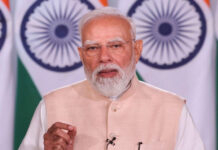
PM Modi Kuwait Emir Call highlighted India’s concerns over the evolving security situation in West Asia as Prime Minister Narendra Modi held a telephone conversation with Kuwait’s Emir, Sheikh Meshal Al-Ahmad Al-Jaber Al-Sabah, on Tuesday.
According to information released by India’s Ministry of External Affairs, the two leaders exchanged views on recent developments in the region and discussed the importance of maintaining peace, stability, and security amid ongoing geopolitical challenges.
The conversation comes at a time when the Middle East continues to experience heightened tensions, prompting diplomatic engagement among regional and global stakeholders.
India Reiterates Support for Peace and Dialogue
During the discussion, Prime Minister Modi expressed deep concern over the escalation of tensions in the region and reiterated India’s position in favor of peaceful resolution through dialogue and diplomacy.
The Prime Minister also reaffirmed India’s strong condemnation of attacks affecting Kuwait’s sovereignty and territorial integrity.
According to the Ministry of External Affairs, Modi emphasized the need for immediate de-escalation efforts and urged all parties to prioritize diplomatic engagement to restore peace and stability across the region.
India has consistently advocated for dialogue-driven solutions in conflict zones and has maintained close diplomatic engagement with Gulf nations, which remain key strategic and economic partners.
Modi Thanks Kuwait for Supporting Indian Community
A significant part of the conversation focused on the welfare and security of the Indian diaspora living in Kuwait.
Prime Minister Modi thanked the Emir for his personal attention to the well-being and safety of the large Indian community residing in the Gulf nation.
Kuwait hosts a substantial Indian expatriate population that contributes to sectors ranging from healthcare and engineering to retail, education, and energy services.
India and Kuwait have maintained strong bilateral ties for decades, supported by people-to-people connections, trade relations, and energy cooperation.
Regional Tensions Remain in Focus
The diplomatic outreach follows recent developments involving Iran and Israel, where tensions had escalated significantly before signs of a temporary pause emerged.
Reports indicate that a ceasefire understanding remains in place between the two countries after several days of military and political tensions. On Monday, Iranian military authorities reportedly announced a halt to attacks against Israel, a move widely viewed as an effort to reduce immediate hostilities.
Despite the pause in direct military actions, both sides continue to exchange statements, highlighting the fragile nature of the current situation.
Regional observers note that the coming days will be critical in determining whether diplomatic efforts can sustain the reduction in tensions.
Trump’s Remarks Draw Global Attention
Meanwhile, U.S. President Donald Trump has claimed that Israel and Iran have agreed to refrain from attacking one another for the time being.
Speaking to reporters in New York, Trump stated that both countries had shown willingness to reduce tensions through diplomatic channels.
He also indicated that discussions regarding a potential nuclear agreement with Iran were in their final stages and suggested that a major development could emerge within the next few days.
According to Trump’s remarks, restrictions related to maritime movement through the Strait of Hormuz would remain in place until a final agreement with Tehran is reached. He added that normal access could be restored once a formal understanding is concluded.
India Closely Monitoring Developments
India has significant strategic interests in the Gulf region, including energy security, trade routes, and the welfare of millions of Indian nationals living and working across West Asia.
Any prolonged instability in the region has the potential to affect global energy markets, shipping routes, and broader economic conditions.
As a result, New Delhi continues to monitor developments closely while maintaining active diplomatic communication with regional partners.
Foreign policy analysts note that India’s engagement with Kuwait reflects its broader commitment to regional stability and constructive dialogue during periods of uncertainty.
India-Kuwait Relations Continue to Strengthen
Relations between India and Kuwait have expanded steadily in recent years, supported by strong economic cooperation and regular high-level exchanges.
Kuwait remains an important energy supplier to India, while bilateral trade and investment ties continue to grow.
The Indian government has repeatedly emphasized the importance of maintaining strong partnerships with Gulf countries, which play a vital role in India’s economic and strategic interests.
The latest conversation between Prime Minister Modi and the Emir underscores the close coordination between the two nations on regional and international issues.
Outlook
The PM Modi Kuwait Emir Call reflects India’s continued diplomatic engagement amid evolving developments in West Asia. As regional tensions remain under international scrutiny, New Delhi has reiterated its support for dialogue, de-escalation, and peaceful conflict resolution.
With ongoing efforts aimed at preserving stability and protecting the interests of citizens across the region, diplomatic channels are expected to remain active in the coming days as governments work to prevent further escalation and encourage lasting peace.