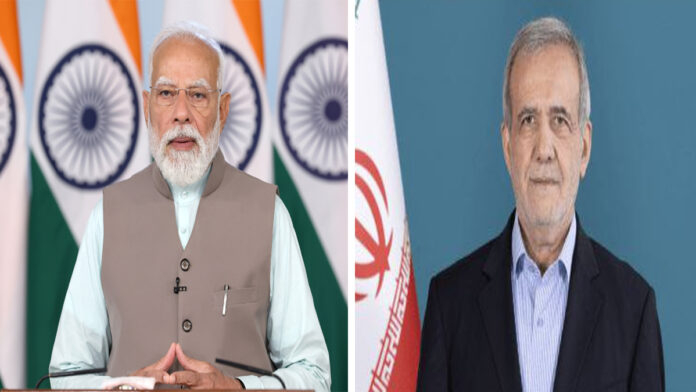
New Delhi, India — March 13, 2026
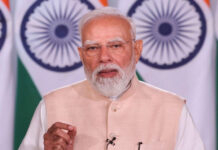
Indian Prime Minister Narendra Modi held a late-night phone conversation with Masoud Pezeshkian on Thursday to discuss the escalating crisis in West Asia and its regional impact.
During the call, Prime Minister Modi expressed deep concern over rising tensions, loss of civilian lives, and damage to critical infrastructure in the region. The discussion focused on the worsening security situation and the importance of diplomatic efforts to restore stability.
India Reaffirms Commitment to Peace and Diplomacy
According to official statements, PM Modi reiterated India’s commitment to peace and stability in West Asia during his conversation with President Pezeshkian. He emphasized that dialogue and diplomacy remain the most effective path to resolving the ongoing crisis.
The leaders discussed the evolving regional situation and the need to prevent further escalation that could threaten global stability.
Safety of Indians and Energy Supply a Top Priority
Prime Minister Modi stated that the safety of Indian citizens abroad remains India’s highest priority, especially amid the growing instability in the region.
In a post shared on social media platform X, Modi said that during the conversation he highlighted concerns about the situation and stressed the importance of protecting civilians.
He also noted that ensuring the uninterrupted supply of essential goods and energy resources remains a major concern for India.
Regional Tensions Intensify After Death of Iran’s Supreme Leader
The regional crisis has deepened following the death of Ali Khamenei during a joint military strike reportedly carried out by the United States and Israel against Iran.
Following the attack, Iran launched drone and missile strikes targeting Israel and U.S. military installations across the Gulf region, significantly raising tensions across West Asia.
The conflict has also affected key international hubs such as Dubai and Doha, which are major centers for global trade and aviation.
India in Constant Contact With Gulf Leaders
Over the past ten days, Prime Minister Modi has also spoken with leaders from several countries across the Gulf and West Asia, including Oman, Kuwait, Bahrain, Saudi Arabia, United Arab Emirates, Jordan, Israel, and Qatar.
During these conversations, he expressed concern over attacks affecting their territories and condemned violations of sovereignty and territorial integrity.
Large Indian Community in West Asia
India is closely monitoring the situation due to the large number of Indian citizens living and working in the region. Nearly 10 million Indians reside across Gulf and West Asian countries, making it one of the largest expatriate communities in the world.
Officials estimate that around 10,000 Indian nationals live, study, or work in Iran, while more than 40,000 Indians reside in Israel.
The government continues to assess the situation and coordinate with regional authorities to ensure the safety and welfare of Indian nationals.