NEW DELHI, India — June 10, 2026
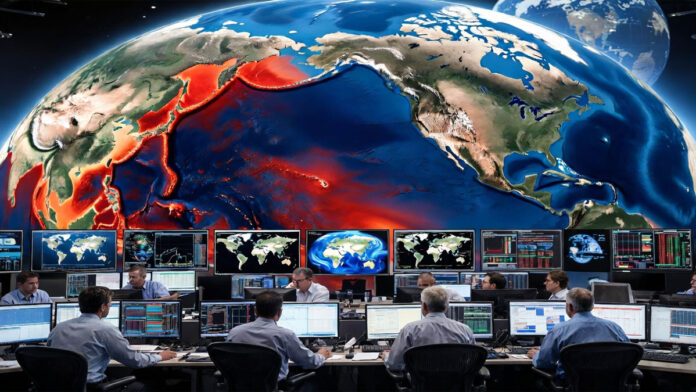
Monsoon 2026 Super El Niño projections are drawing significant attention from climate researchers after the latest weather model updates suggested the possibility of an unusually strong warming event in the equatorial Pacific Ocean. According to recent model guidance released by the European Centre for Medium-Range Weather Forecasts (ECMWF), scientists are closely monitoring conditions that could evolve into a powerful El Niño episode over the coming months.
While meteorologists caution that long-range forecasts remain subject to change, the latest projections indicate the potential for sea surface temperatures in parts of the Pacific Ocean to rise well above normal levels. If these forecasts are realized, the event could influence weather patterns across multiple continents, including Asia, North America, South America, Africa, and Australia.
What Is El Niño?
El Niño is a naturally occurring climate pattern characterized by unusually warm sea surface temperatures in the central and eastern equatorial Pacific Ocean. The phenomenon develops when trade winds weaken, reducing the westward movement of warm ocean waters and allowing heat to accumulate closer to the western coast of South America.
The warming of Pacific waters can alter atmospheric circulation patterns around the world, affecting rainfall, temperatures, storm activity, and agricultural conditions across many regions.
Typically, El Niño events occur every two to seven years and vary significantly in intensity.
Why Scientists Are Paying Attention
Recent ECMWF model projections have suggested a scenario in which Pacific Ocean temperatures could rise substantially above seasonal averages during the latter part of 2026 and into subsequent months.
Climate experts note that previous strong El Niño events have been associated with major disruptions in global weather systems. Historical episodes in 1982-83, 1997-98, and 2015-16 produced widespread impacts, including droughts, flooding, agricultural losses, and record-breaking temperatures in several regions of the world.
The 1997-98 El Niño is widely regarded as one of the strongest on record, while the 2015-16 event contributed to exceptionally warm global temperatures and significant weather extremes.
Current forecast scenarios have prompted scientists to monitor whether ocean warming could approach or exceed levels observed during those historic events.
Possible Impact on India’s Monsoon
India’s economy and agricultural sector remain closely linked to the performance of the southwest monsoon, which provides a substantial share of the country’s annual rainfall.
Historically, strong El Niño conditions have often been associated with below-normal monsoon rainfall across parts of India. When Pacific Ocean temperatures rise significantly, atmospheric circulation patterns can shift in ways that weaken monsoon systems over the Indian subcontinent.
Meteorologists emphasize that it is too early to determine the exact impact on India’s rainfall distribution. However, if a strong El Niño develops and persists during critical monsoon months, some regions could experience reduced rainfall and elevated drought risks.
Areas often considered vulnerable during weaker monsoon seasons include portions of western, central, and northwestern India, although actual outcomes depend on several interacting climate factors.
Potential Global Consequences
Beyond South Asia, a strong El Niño can influence weather conditions worldwide.
Possible effects may include:
- Increased temperatures across large parts of the globe.
- Changes in tropical cyclone activity.
- Altered rainfall patterns in North and South America.
- Greater drought risks in some agricultural regions.
- Increased flooding risks in others.
- Pressure on food production and water resources.
Climate researchers also note that a major El Niño event occurring alongside long-term global warming trends could contribute to periods of exceptionally high global temperatures.
Forecasts Still Evolving
Despite growing attention surrounding the latest model projections, weather experts stress that long-range climate forecasts are not guarantees. Ocean-atmosphere interactions can change over time, and forecast confidence generally decreases further into the future.
Scientists will continue monitoring Pacific Ocean temperatures, atmospheric circulation, and seasonal climate indicators throughout the remainder of 2026. Updated forecasts in the coming months are expected to provide a clearer picture of whether a strong or potentially record-setting El Niño event will develop.
For now, climate agencies and weather experts are watching conditions closely as the world enters another potentially significant phase of the global climate cycle.
Conclusion
The possibility of a Monsoon 2026 Super El Niño has emerged as one of the most closely watched climate developments of the year. While forecasts remain preliminary, scientists agree that any major warming event in the Pacific Ocean could have far-reaching implications for global weather patterns, agriculture, water resources, and India’s monsoon season. Future forecast updates will be critical in determining the scale and severity of any potential impacts.