New Delhi, India — March 7, 2026
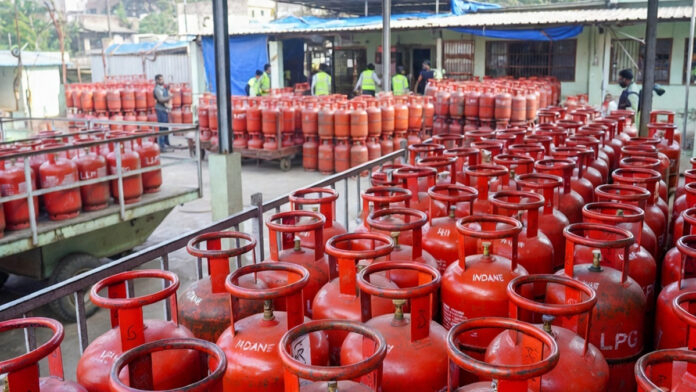
Cooking gas prices across India have increased starting March 7, 2026, with a ₹60 hike in 14.2-kg domestic LPG cylinders and a ₹115 increase in 19-kg commercial LPG cylinders, impacting households as well as restaurants, hotels, and small businesses.
The revised prices came into effect immediately across major cities, according to industry sources.
New LPG Cylinder Prices in Major Cities
Following the latest revision, the cost of 14.2-kg domestic LPG cylinders has increased across key metropolitan areas:
Delhi: ₹853 → ₹913
Mumbai: ₹852.50 → ₹912.50
Kolkata: ₹879 → ₹939 (approx.)
Chennai: ₹868.50 → ₹928.50
This is the first revision in domestic cooking gas prices since April 2025, when the non-subsidized LPG cylinder price in Delhi was last fixed at ₹853.
The increase is expected to affect household budgets as well as businesses that rely heavily on LPG for daily operations.
Commercial LPG Cylinder Prices Also Rise
The price hike also applies to 19-kg commercial LPG cylinders, widely used by restaurants, hotels, and catering services.
Revised commercial LPG cylinder prices include:
Delhi: ₹1768.50 → ₹1883
Mumbai: ₹1720.50 → ₹1835
Kolkata: ₹1875.50 → ₹1990
Chennai: ₹1929 → ₹2043.50
Industry observers say the rise could add operational costs for hospitality businesses and food establishments.
Government Assures Adequate Energy Supply
Amid discussions about global energy supply and fuel availability, Union Petroleum and Natural Gas Minister Hardeep Singh Puri recently reassured consumers that India has sufficient energy resources.
In a post on social media platform X, the minister stated that the government’s priority remains ensuring affordable and sustainable fuel availability for citizens.
He emphasized that there is no shortage of energy in India, and consumers should not worry about supply disruptions.
Indian Oil Denies Rumors of Fuel Shortage
Meanwhile, Indian Oil Corporation also dismissed circulating claims suggesting a shortage of petrol and diesel in the country.
In a statement posted on X, the company said:
India currently has adequate fuel stocks.
The fuel supply and distribution network is functioning normally.
Consumers should rely only on official sources for accurate information and avoid unnecessary panic.
India’s Energy Supply Remains Strong
Government sources indicated that India’s energy supply situation remains stable, even amid concerns about potential disruptions through the Strait of Hormuz, a key global oil shipping route.
Officials said India currently has diversified sources of crude oil and petroleum product imports, ensuring sufficient availability to meet domestic demand.
Rising Russian Oil Imports Since 2022
India has significantly expanded its crude oil import sources in recent years.
According to government data:
Russia accounted for just 0.2% of India’s crude imports in 2022.
The share has increased substantially since then.
In February 2026, India imported around 20% of its crude oil — about 1.04 million barrels per day — from Russia.
This diversification strategy is aimed at improving long-term energy security.
Government Orders LPG Refineries to Boost Production
To ensure adequate availability of cooking gas, the government has instructed LPG refineries across the country to increase production.
Officials said India’s LPG stock position remains stable, but production is being boosted to prepare for any potential global supply disruptions.
India has also begun receiving LPG shipments from the United States starting January, following a one-year contract signed by Indian public sector oil companies in November 2025.
The agreement allows imports of around 2.2 million metric tons of LPG annually from the U.S. Gulf Coast.
Emergency Powers Used to Stabilize Supply
The government has also invoked emergency powers under the Essential Services Maintenance Act (ESMA) to ensure consistent LPG production and supply.
Authorities have directed oil refineries to increase LPG output to maintain adequate availability of domestic cooking gas, especially amid geopolitical tensions in West Asia.
Officials said the move is aimed at preventing supply disruptions and maintaining steady LPG distribution across the country.