New Delhi | January 17, 2026
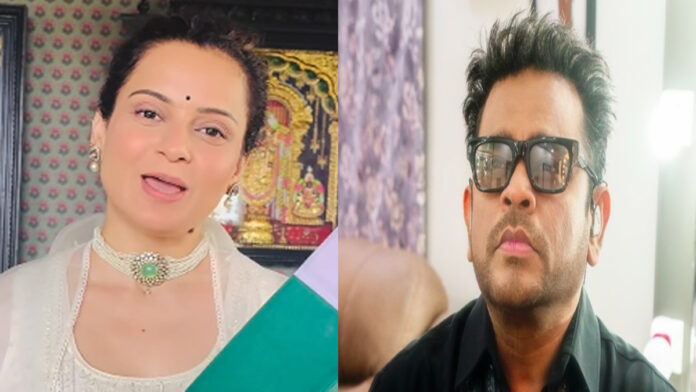
The debate surrounding AR Rahman’s recent remark on rising communal undertones in the Indian music industry has intensified, as BJP MP and actress Kangana Ranaut sharply criticized the Oscar-winning composer. Rahman’s comments, given during a BBC Asian interview, have triggered reactions from multiple artists and public figures across the country.
In the interview, Rahman expressed concern over what he described as increased “communal behavior” and expanding non-creative influence within the music industry over the past eight years. His remarks sparked immediate backlash, with reactions from lyricist Javed Akhtar, singers Hariharan, Shaan, and now Kangana Ranaut.
Kangana Ranaut’s Strong Rebuttal
Responding on social media, Kangana accused Rahman of harboring deep bias.
Sharing a story on her Instagram, she wrote:
“Dear Rahman ji, I have faced immense discrimination in the film industry simply for supporting a saffron party. Yet I must say, I have never seen someone as prejudiced and hateful as you.”
Kangana Shares Episode From Her Film ‘Emergency’
Kangana further revealed that Rahman allegedly refused to even hear the script of her directorial venture Emergency.
She stated:
“I wanted to narrate the story of Emergency to you. Not only did you refuse to hear it, you refused to meet me. I was told you don’t want to be associated with a ‘propaganda’ film. The irony is that critics called Emergency a masterpiece, and even opposition leaders sent me appreciation letters. But your hatred blinded you. I feel sorry for you.”
What AR Rahman Actually Said
During the BBC Asian interview, Rahman noted that his work ethic has always been rooted in dedication rather than chasing projects. He said he prefers to let his craft attract work naturally.
He added that the industry is increasingly influenced by people who lack creative vision. While acknowledging that the issue “may be linked to religion,” Rahman said such concerns are never voiced directly to him but are widely whispered behind his back.
The composer’s comments have triggered a polarizing debate, pulling in artists, political voices, and cultural organizations, with the controversy showing no signs of cooling down.