Islamabad, Pakistan — April 10, 2026
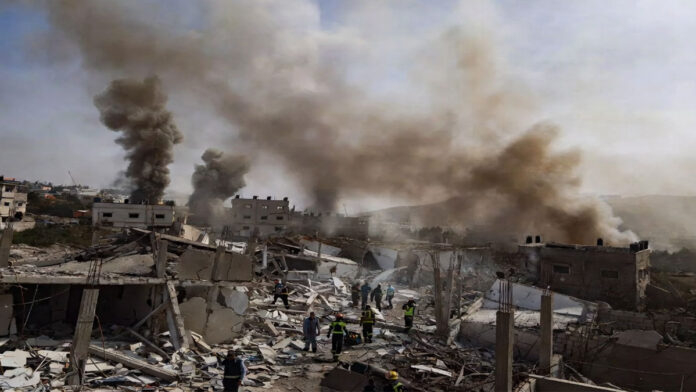
Tensions in the Middle East escalated sharply on Friday as Israel launched fresh airstrikes across southern Lebanon while the strategically vital Strait of Hormuz remained closed, intensifying concerns over global energy disruptions and regional instability.
The renewed Israeli attacks come just days after a fragile ceasefire between the United States and Iran temporarily halted direct military operations. However, both Washington and Tehran have accused each other of violating the truce, particularly over continued hostilities involving Iran-backed Hezbollah forces in Lebanon.
According to Lebanese state media, Israeli strikes targeted multiple towns in southern Lebanon, killing more than a dozen people, including eight members of the country’s state security forces. Earlier in the week, a large-scale Israeli offensive reportedly resulted in over 250 casualties in densely populated areas.
Meanwhile, the closure of the Strait of Hormuz—a critical global oil transit route—continues to disrupt international energy markets. The blockade has triggered what analysts describe as one of the most severe supply shocks in recent history.
U.S. President Donald Trump criticized Iran’s handling of maritime traffic through the strait, warning Tehran against imposing transit fees on oil shipments. In a social media statement, he said Iran was doing a “very poor job” managing access and emphasized that such actions violate existing agreements.
Amid rising tensions, U.S. Vice President JD Vance departed for Pakistan to lead Washington’s delegation in the first direct peace talks with Iran since the escalation began. Speaking before departure, Vance expressed cautious optimism but warned that the U.S. would not tolerate bad-faith negotiations.
“If they attempt to mislead us, they’ll find the negotiating team is not receptive,” he said.
Pakistan’s capital, Islamabad, has been placed under heightened security ahead of the high-stakes diplomatic meeting. Officials familiar with the preparations indicated that discussions remain on schedule despite the deteriorating situation in Lebanon.
Iran has maintained that the ceasefire agreement should extend to Lebanon, a stance initially supported by Pakistan. However, both Israel and the United States have rejected this interpretation, arguing that the truce applies strictly to direct U.S.-Iran hostilities.
In a notable development, Israeli authorities signaled openness to separate negotiations with the Lebanese government aimed at ending the conflict and disarming Hezbollah, though no formal timeline has been announced.
Despite ongoing violence, diplomatic sources suggested that momentum for the U.S.-Iran talks remains intact, with both sides under pressure to stabilize the region and restore the flow of global energy supplies.