Dubai, United Arab Emirates — April 22, 2026
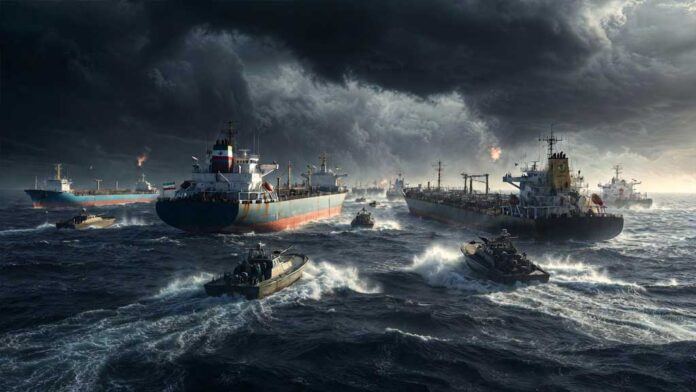
Tensions in the Middle East escalated sharply on Wednesday after Iran reportedly opened fire on multiple commercial vessels and detained at least two ships in the strategically critical Strait of Hormuz, one of which was bound for India.
The incident, involving Iran’s paramilitary Islamic Revolutionary Guard Corps (IRGC), has raised fresh concerns over maritime security and the stability of global energy supply chains.
Ships Targeted, One India-Bound
According to multiple reports, Iranian forces fired on three merchant vessels navigating international waters before seizing control of at least two ships identified as MSC Francisca and Epaminondas.
A third vessel, Euphoria, was also reportedly targeted and remains stranded near Iranian territorial waters.
Sources indicate that one of the intercepted ships was en route to India, heightening concerns in New Delhi over potential disruptions to critical energy and trade routes.
Iranian state media claimed the vessels failed to comply with warnings, prompting the military response.
Escalation Amid Fragile Diplomacy
The maritime confrontation comes at a sensitive moment, just as Donald Trump signaled a possible extension of ceasefire efforts to allow space for renewed diplomatic engagement with Iran.
However, parallel US actions to maintain pressure on Iranian ports have reportedly fueled tensions. Iranian officials have stated that no meaningful negotiations will proceed unless such restrictions are lifted.
Global Trade and Oil Markets Under Pressure
The Strait of Hormuz remains one of the world’s most critical maritime corridors, handling a significant share of global oil shipments. Any disruption in this region has immediate global repercussions.
Following the latest escalation:
- Brent crude prices surged past $98 per barrel
- Oil prices have risen nearly 35% since the conflict intensified
- Shipping and insurance costs have increased sharply
These developments are already translating into higher fuel and transportation costs worldwide, with ripple effects on food prices and inflation.
Diplomatic Efforts Stall
Efforts to de-escalate the crisis appear to be losing momentum. Pakistan has reportedly attempted to mediate and host a new round of talks, but no formal confirmation from Iran has emerged.
Iranian diplomat Mojtaba Ferdowsipour, currently in Egypt, reiterated that negotiations are unlikely without changes in US policy, particularly regarding economic and maritime restrictions.
Conflict Background
The current escalation traces back to February 28 airstrikes involving the United States and Israel targeting Iranian positions, triggering a wider regional conflict.
Since then:
- Over 3,375 deaths reported in Iran
- More than 2,290 casualties in Lebanon
- Civilian and military losses reported in Israel and among US forces
The situation continues to deteriorate, with Iran warning of a response “beyond imagination,” while tensions between Israel and Hezbollah persist in Lebanon.
Outlook
With maritime security deteriorating and diplomatic channels strained, the crisis is entering a critical phase. Analysts warn that without immediate de-escalation, the conflict could further disrupt global trade, energy supplies, and economic stability.